Skip to content

Archive for

Born Wise

kids on beach

I wrote a post last month about laughter — and specifically, how kids laugh hundreds of time every day, but somehow grow into 40-yr-olds who can count their daily giggles on one hand.  My kids teach me this simple lesson — laugh more — every single day.  Actually, I think that kids are full of wisdom — innate, untouched, beautifully naive, human wisdom — that can help us be better, more real, and more well grown-ups.  Here are a few of my favorite bits of wisdom from the wee ones:

Believe that people are good until they do something that makes you feel otherwise. And then be open to believing they are good again. 

Seek happiness for the people you love.

It’s OK to ask “why” 5+ times in a row.

Running is faster than walking.

If you’re scared, tell someone.

It feels amazing to learn new stuff.

Sleep…or you’ll be cranky.

Huge, long, wraparound hugs feel amazing.

All art is beautiful.

How about you?  What life lessons have you learned from a child, and why do you think we lose sight of the basics as we get older?

The World According to Rumi

thinking tree

Living in a world in which it’s easy to get stuck in a myopic view of what it means to be “smart,” I love this reminder from Rumi, a renowned 13th century poet, jurist, theologian, and Sufi mystic.

Two Kinds of Intelligence 

There are two kinds of intelligence: one acquired, as a child in school memorizes facts and concepts from books and from what the teacher says, collecting information from the traditional sciences as well as from the new sciences.

With such intelligence you rise in the world. You get ranked ahead or behind others in regard to your competence in retaining information.  You stroll with this intelligence in and out of fields of knowledge, getting always more marks on your preserving tablets.

There is another kind of tablet, one already completed and preserved inside you. A spring overflowing its springbox.  A freshness in the center of the chest.  This other intelligence does not turn yellow or stagnate.  It’s fluid, and it doesn’t move from outside to inside through the conduits of plumbing-learning.

This second knowing is a fountainhead from within you, moving out.

I’ve recently been trying to take a few minutes each day to read Rumi’s wisdom, and I’ve found it calming and centering.  I’m always looking for new ideas — what do you read/listen to when you’re looking for spiritual grounding?

Rolling On Down the Road

strollerI drove past a shirtless guy today HAMMERING down the road with earbuds in and a toddler in his running stroller.  Seriously, he was running like he was being chased by the mafia (or his wife trying to get him to do the laundry)…sprinting so fast that I wanted to buy his kid a helmet and a pair of wrist guards.  I was both in awe and sort of terrified, wanting to applaud him and report him at the same time.  This guy is obviously not alone — according to the Guinness Book of World Records:

A 2:42 marathon pushing a stroller — seriously?  And people are competing for world records in stroller pushing — really?

I’ve done my fair share of fast running with a stroller (usually when it was the only option or when I couldn’t quiet a screaming baby at 5am).  And in those moments, I was overwhelming grateful to be able to get out the door at all; it was often the only chance I had at a real-deal workout.  So I totally respect and understand sprinting stroller man…and seeing him reminded me that for every thing there is a season.

But as time has gone on, and the kids have grown tired of sitting for long periods of time and I’ve wanted to carve out workout time as “me time,” my stroller runs are now more about company and conversation.  They’re about us, not me.  We talk about the seasons and traffic patterns and how the flowers smell and how the neighborhood construction projects are coming along; and the kids ask questions like “why does that car have a blanket on it?” and “why did that guy walk when the light was red?”  We look at the ocean.  We figure out what we’re going to eat for brunch afterwards.  We don’t count miles, we count park benches.  We have low heart rates and high spirits.

I’ve learned to love these runs for what they are — family time.  And save the sweaty sprints for the treadmill.

How do you feel about working out with your kids?  Do you try to make family workouts challenging, or do you save the “tough training” for solo/grown-up time?

Unitasking

The aim of life is to live, and to live means to be aware joyously, drunkenly, serenely, divinely aware.” – Henry Miller

photo by sethoscope, via  flickr creative commons

photo by sethoscope, via flickr creative commons

I used to think that multitasking — trying to ALWAYS kill two birds with one stone — was the best way to squeeze more into my life.  And in some ways, I still believe this.  I like to to do walking meetings.  I like to listen to podcasts while I work out.  And yes, date night (well, date day) is often a bike ride or a trail run.

But I’ve noticed that there is a stark difference between “combining activities to be efficient” and the dark side of multitasking which feels stressful and chaotic and “one foot out the door” at all times.  We see the latter everywhere these days — the guy at the gym talking on his phone and reading The Economist while he “works out” on the elliptical machine…the colleague who is banging out emails during another colleague’s presentation…the mom catching up with her friends at the park while her kid masters the monkey bars for the first time ever.  I recognize these people because as much as I’d like to think otherwise, I am more like them than I am unlike them.

There’s a ton of data out there about how multitasking impacts our productivity, our creativity, our memory, and our ability to influence others.  A Stanford study found that “people who chronically engage in media-multitasking exhibit certain cognitive deficits: specifically, they have more trouble ignoring distractions, keeping irrelevant memories from interfering in their present task, and switching from one task to another, mostly because they can’t help thinking about the task they’re not doing.”  And if you’re interested in this research, check out this article or a book written a few years ago called The Myth of Multitasking: How “Doing It All” Gets Nothing Done (a few basic google search terms will open up a spigot of related information too).

Despite reading about this for years, I’m only just now beginning to make the shift from multitasking to unitasking (as we know, information does not equal behavior change).  I’m trying out a bunch of practices to see what’s easy and what’s hard…what sticks and what doesn’t.

  • Check email at set intervals (morning, noon, end of workday, end of day)
  • Close tabs when I’m done with them (goodbye, days of last week’s kayak search still being open in my browser)
  • Try a new workspace when starting a new task (mixing up the environment can work wonders)
  • Embrace airplane mode (believe it or not, your phone’s airplane mode works at the park, at dinner, and at parties too!)
  • Clear the table (remove any technology, newspapers, books, magazines, legos, etc from the table and focus on the food and the company)
  • Schedule reading time (save media/blog reading for a structured hour each morning rather than reading all day long)
  • Work on a passion project (like a blog! or an art project!  or building robots in your basement!)
  • Sleep (sleep = unitasking by default!)

How do you feel about multitasking?  When does killing two birds with one stone help you, and when does it hurt you and the people around you?  Do you have any unitasking secrets to share?

Quinoa Flour + Garden Cleanout

photo by mnapolean via flickr creative commons

photo by mnapolean via flickr creative commons

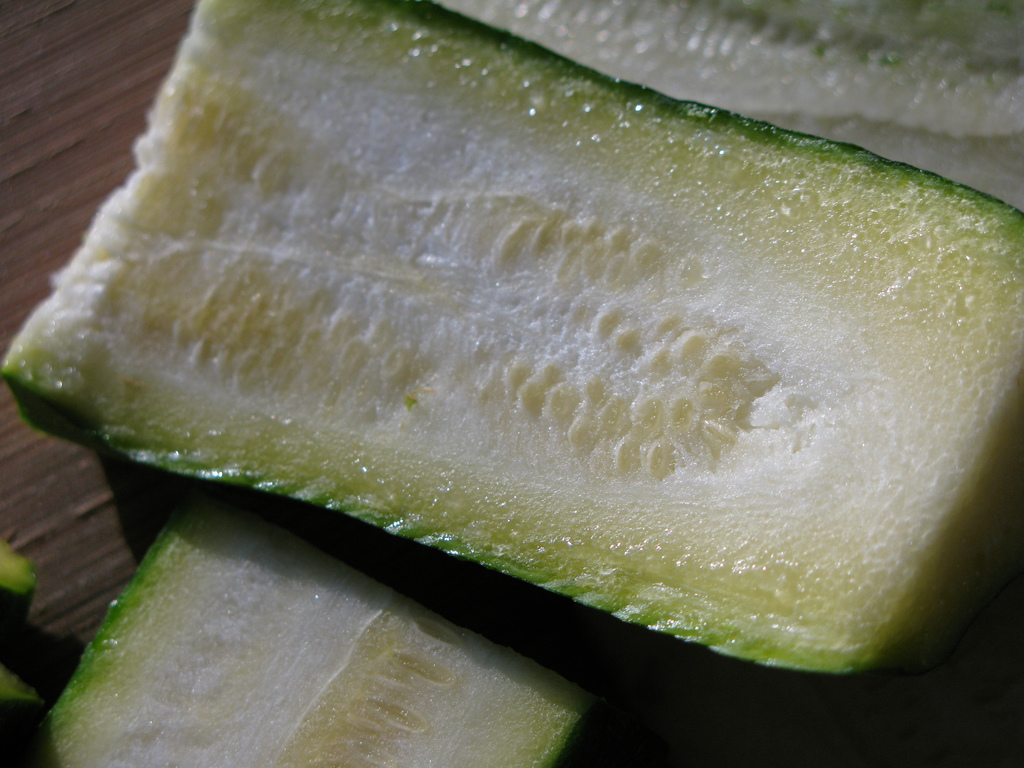
Our garden is overflowing with tomatoes and zucchini these days.  The kids are making sure the tomatoes get plucked from the tangled vines once they’re red and juicy, but we’ve let the zucchini get a little bit out of control.  OK, a lot out of control.  Sean bushwhacked his way thorough the leaves last week to find a few that had embarrassingly grown to the size of bowling pins.  Everyone who has seen them sitting on the counter during the past week has said something like “woah, do you know that you’re not supposed to let zucchini get so big?” or “is that seriously a zucchini?” or “when zucchini are that overgrown, all you can really do with them is make bread.”

So…making bread is what we did yesterday afternoon.  Muffins, actually.  Delicious, warm, gooey, chocolatey, zucchini-y muffins — a true feat for the sporadic bakers in our house.  I had some quinoa flour in the cupboard and have been wanting to try using it, so searched for a recipe using zucchini and quinoa flour.  And bingo — I found a great one:

Rich Chocolate Zucchini Muffins

  • ⅔ cup packed brown sugar
  • 2 tablespoons canola oil
  • 3 large eggs
  • 1 cup unsweetened applesauce
  • 2 cups quinoa flour
  • 3 tablespoons unsweetened cocoa powder
  • 1½ teaspoons baking soda
  • 1 teaspoon ground cinnamon
  • ½ teaspoon salt
  • 2 cups shredded zucchini
  • 1 cup semisweet chocolate chips (6 ounces)

1. Mix the brown sugar, canola oil, and eggs in the bowl at low speed; add applesauce until mixture is smooth.

2. Whisk together the quinoa flour, cocoa powder, baking soda, cinnamon, and salt. Add to the mixer bowl and beat until the ingredients are smooth and well combined. Using a spoon or a rubber spatula, fold in the zucchini and the chocolate chips.

3. Pour the mixture into two greased muffin plans.  Bake at 350 degrees for 25-ish minutes until a utensil or toothpick comes out clean.

These were a huge hit, and would have been good even without the chocolate chips.  I’m definitely going to make quinoa flour a baking staple (you know, like four times a year).  Enjoy!

Have you ever baked with quinoa or any other special flours?  Make anything delicious?  Oh, and if you have any ideas about what to do with an armful of zucchini, please let me know!

Solstice!

photo

One of my very favorite days of the year — the summer solstice — began at 10pm (PDT) last night, ushering in the season of sunshine, cannonballs, fireflies, swimsuits, BBQs, skinny dipping, meals outside, nostalgia, and yes, health.  Solstice celebrations are underway around the world, as Scandinavians sing, dance, and fill their bellies with herring and vodka…Europeans host bonfires and sprint naked around town…and New Yorkers head to Times Square to bust out a few sun salutations.

Now widely known as a party holiday, in ancient times, the solstice was an essential part of well-being (associated with agriculture + growth).  I feel a sense of renewal every time the seasons change, but for me, this feeling is the strongest during the summer solstice when the sunshine on my back gives me a sense of optimism and hope and excitement and even peace.  These quarterly milestones are a natural time to make a few commitments (some of mine include: eat dinner outside every night we can, train for and complete a half-ironman, master a forearm stand, teach the kids how to swim, rise early, get enough sleep, and make an annual summer pilgrimage to the Midwest, focus on impact at work)…if you’re into that commitment thing.

If you take a few minutes to think about your commitments today, here are a few questions to consider.  And beyond these, I’d love to hear what other questions come up with!

  • What could spice up my workout regimen?  Trying a new class?  Picking up a new sport?  Finding a training partner?  Signing up for an organized event?
  • What foods make me feel good?  Not just for a second, but for the whole day.  How can I get more of those into my diet?
  • Are there times during the day when it’s easiest for me to focus?  How can I shift my day to do the most important things then?
  • Who are the most important people in my life, and am I seeing them often enough?  If not, how can I see more of them?
  • Am I doing something every day to help another person?  If not, how can I bring more attention to this?
  • How well does my work — where I work, what I do, and who I work with — align with my life purpose/mission?  If it feels misaligned, what’s one think I can do to make a change?
  • Do I have something to look forward to during the next few months?  If not, could I get something on the calendar?
  • Where am I stuck, and how might I get UNSTUCK?

What are you doing to celebrate the solstice?  Are you committing to anything new during the season of the sun?

Calm Amidst the Storm

photo by: david goehring (via flickr creative commons)

photo by: david goehring (via flickr creative commons)

I came across a compilation yesterday called “The Pace of Modern Life.”  It includes excerpts from articles published between 1871-1915 lamenting feelings of continual acceleration, fears about the deterioration of play, and concerns about the dying art of conversation/long-form thought.  Sound familiar?

Swap “tweet” for “letter” in a few of these excerpts and they could have been written today.  We’re fretting about our 240-character “essays” and steady stream of photos in the same way people 100 years ago worried that the efficiency of the post was reducing the value of a thoughtful letter.  This raises the question — is this a technology issue, or simply one of the complicated realities of the human condition?  Is it about a universal truth that human beings struggle to slow down when the world around us seems to be speeding up?

There’s a lot of talk about slowing down these days (at least in the bubble we call Silicon Valley), and there are lots of questions about whether we’re heading down a road where people think in snapshots, not paragraphs and our memories live in the cloud, not in our hearts.  My answer: we need to look at our own lives, our own routines, our own values, and our own priorities in order to find the balance between the gifts technology gives us and the real-life reflection and connection we need as humans.  Each of our needs…and each of our answers will be different.  But I’d bet that slowing down might actually help most of us speed up in the grand scheme of things.

Here are a few simple ways I’m trying to find this harmony (TRYING is the operative word here):

  • Unplugged mornings (running/writing/reading in the mornings instead of typing)
  • Email “blocks” (checking email at set intervals versus constantly)
  • Walking meetings (no urge to check email/phone during the meeting if it’s not available)
  • Tech-free dates (leaving my phone in the car when I’m out with my husband)
  • “Day in review” talks with the kids (lie in bed with the kids at night at talk about their days)

What about you?  Is it hard for you to slow down amidst a fast world outside?  What helps you slow down during the day or week?

At the Core

photo by anya quinn via flickr creative commons

photo by anya quinn via flickr creative commons

Fitness magazines seem to include a piece on core strengthening exercises in every single issue.  You know the drill – a multi-page spread featuring a 20-something-year-old woman in little shorts and a high pony doing a series of exercises on a beach or next to a worldly monument or in an exotic looking grass hut.  After all, who wouldn’t want to spend their mornings doing plank pose in a little grass hut?

For those of us whose mornings look more like “get up and stumble to the coffeemaker, slurp down some coffee/check my email/start blog post/go for workout/race into shower/read books with kids/take kids to school,” there is no side plank and there is definitely no grass hut in sight.  But this doesn’t mean we don’t need to work on our core strength.  We all need a solid core in order to do everything from cleaning our houses to playing sports to having sex.  So if you’re like me, and struggle to find focused time for core work, here are three simple ways to fit it in:

  • Just stand up straight.  Seriously, just focusing on your posture can make a huge difference.  Stomach muscles pulled toward the spine and tailbone tucked under.  Yes, it’s easier than it looks.
  • Move during the day.  Pick up toys off the floor.  Reach for things on the top shelf.  Work standing up.  All of these little movements add up.
  • TRX, TRX, TRX.  TRX is an amazing tool that works your abs while you work other muscle groups.  It’s a great way to work your core while you work other muscle groups at the same time.

If you still need convincing that core strength matters, check out this article from Harvard’s Healthbeat newsletter.  And if you’re a runner, here’s some great advice about core workouts for running.  Oh, and if you can figure out how to make that grass hut thing work on a regular basis, please let me know how.

How do you keep your core strong?  And how has having a strong core helped you in your workouts and in your life?

Personalizing Your Health

exercise

I recently learned about WellnessFX, a San Francisco based start-up focused on “bringing personalized health data directly to the hands of consumers, conveniently and superbly.”  Testing cholesterol, thyroid function, liver + kidney health, nutrition + electrolytes, basic inflammation, performance hormones, and metabolic hormones — and then helping you interpret your personalized data — WellnessFX ambitiously sets out to empower people with actionable insights they can use to improve their health.   Pricing ranges from $29 – $529, depending on what you’re having tested.  I’m intrigued enough to give this a shot; if you’ve by chance had a WellnessFX screening, I’d love to hear your thoughts about whether it added value and which package to choose.  And stay tuned for a future post once I’ve had the screening done.

In the meantime, I thought I’d share something I came across as I was exploring the company.  They created a free e-book called “10 Small Steps to Wellness.”  The ten they chose are interesting — I love some of them (#s 2, 3, 5, 6, 7), but I think a few of them would be far from my personal top 10 small steps (i.e., I’d never bring weights on a business trip…I think a bit of dirt is good for you….I’m not sold that supplements are necessary/good for you…and I think I’d argue to flat out eliminate heavy drinking, versus just drink water to compensate).  Nonetheless, seeing someone else’s list is always a great catalyst to think about what might be on yours.  Here’s the list from WellnessFX:

  1. Keep out harmful pathogens: practice good hygiene. SAMPLE COMMITMENT: For one month I will wash my hands whenever possible before and after social events, meals, and taking public transportation.
  2. Get some Z’s.  SAMPLE COMMITMENT: For two weeks I will go to bed and get up at the same time everyday
  3. Simple carbs (sugars) lower the immune system: avoid them!  SAMPLE COMMITMENT: For one week I will avoid sugary foods or processed foods and replace them with whole, natural foods.
  4. Don’t forget the supplements.  SAMPLE COMMITMENT: For one month I will make a supplement plan and stick to it – even if I’m traveling!
  5. Relax, relax, relax.  SAMPLE COMMITMENT: For one week I will take 10 minutes to myself every day to clear my mind – no computer or phone allowed!
  6. Workout hard, not long.  SAMPLE COMMITMENT: For one month I will dedicate my workouts to shorter, more intense intervals.
  7. Include the family.  SAMPLE COMMITMENT: For one month I will be active with others.
  8. Add some pounds.  SAMPLE COMMITMENT: For the next three trips longer than three days, I will bring my own weights – and use them!
  9. Keep your metabolism amped.  SAMPLE COMMITMENT: For one month I will prepare my own meals ahead of time, pack snacks, and take healthy options to potlucks.
  10. Be wary of alcohol.  SAMPLE COMMITMENT: For one month, when doing heavy drinking, I will have one glass of water for every glass of alcohol.

What’s in your top 10 that’s not included in this list?  And if you’d like to write your own wellfesto (a collection of your commitments), please send it my way, and I’ll beautify it and post it!

Grains of the Gods

via mark bittman

via mark bittman

Mark Bittman posted a graphic last week that I loved, for both its beauty and its simplicity.  I love grain salads in the summertime — they’re easy to make ahead of time for a BBQ, they keep well in the fridge, and they’re amazing 1-dish meals that leave you satisfied but not stuffed.  Inspired after seeing this image, I made a favorite recipe for dinner last night.  The core grain is farro, a wheat most commonly grown in Italy.  With a chewy texture and rich, nutty flavor, it’s distinct, crave-worthy, and our kids even eat it!  Here’s my go-to recipe:

  • 1-2 cups of farro (boiled and drained)
  • Blanched asparagus + snow peas
  • Halved cherry tomatoes (we plucked ours from the garden — whoo hoooo)
  • 2-3 Tablespoons of chopped dill
  • Dressing (1/2 C olive oil + 1/4 C balsamic + salt + pepper)
  • Feta cheese to taste

What’s your favorite grain-based salad (if you’re a grain eater)?  And if you don’t eat grains, why not?

Alphabet Scramble

Learning from parenting and life, while trying to get dinner on the table

The Lemonade Chronicles

A quixotic quest for the bright side.

mamajamas mom

don't sweat the baby stuff

The Development Sherpa

by SBK & Associates

wellfesto

hacking health, designing life

Rudeysroom

Rudey's Room

Building Customer Driven SaaS Products | Jason Evanish

Posts with strategies and tactics on building great products and how to be a better leader

The Blog of Author Tim Ferriss

Tim Ferriss is the author of five #1 New York Times bestsellers and host of The Tim Ferriss Show podcast.

Reflections Corner

hacking health, designing life

The Marginalian

Marginalia on our search for meaning.

Greater Good: Parenting & Family

hacking health, designing life