Skip to content

Archive for

Laugh More

laughter

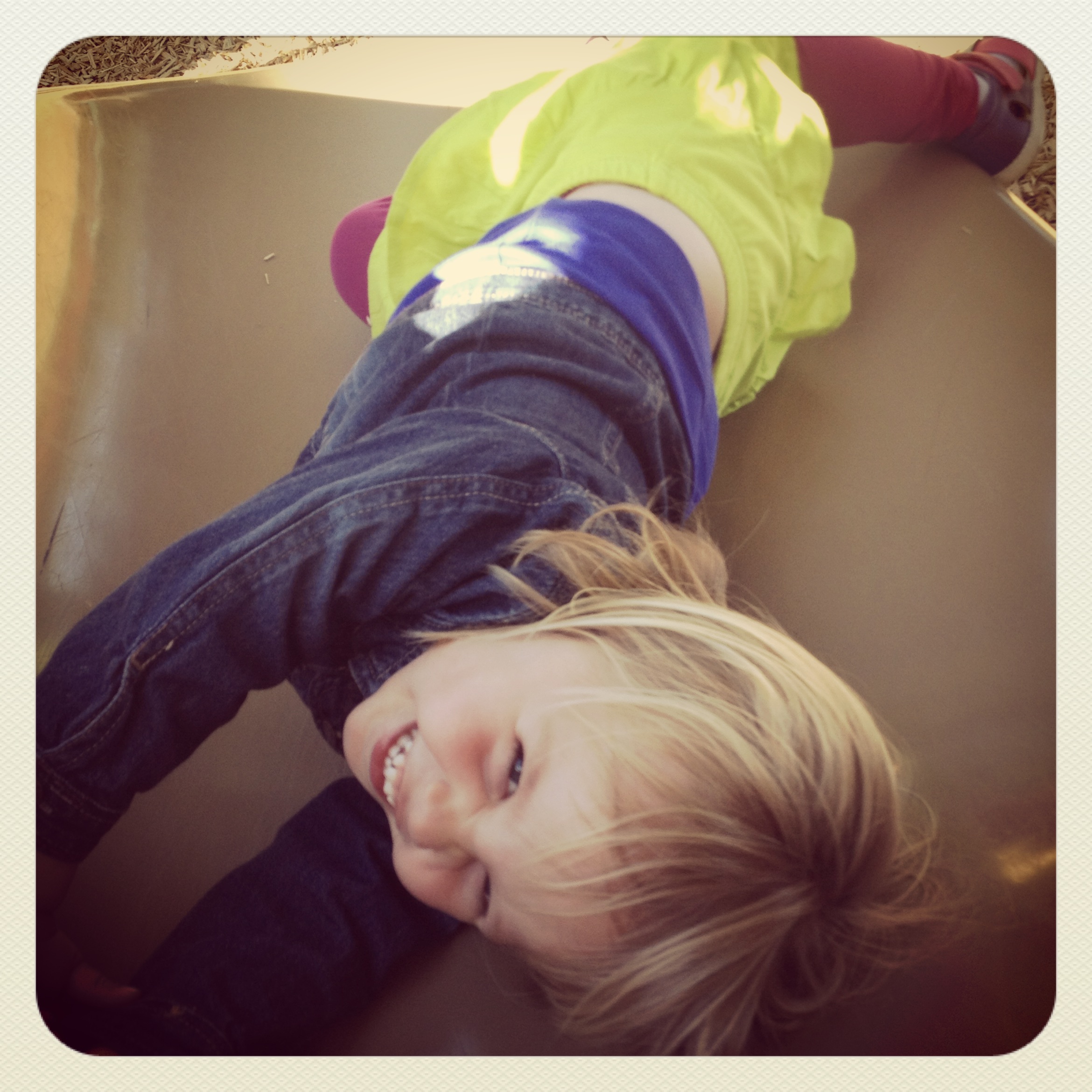
When was the last time you laughed?  Like really, really laughed — maybe until your stomach muscles felt tired and your eyes watered?  I’ve been noticing something about laughing lately.  Kids do it constantly.  ALL. THE. TIME.  When they wake up…when they are supposed to be eating…basically, whenever they’re not screaming.  According to research, the average four-year-old laughs 300 times every day.  Considering the average four-year-old is only awake 12 hours/day, that kid is laughing 25 times per hour.  That kid is laughing more than once every THREE MINUTES.

But adults don’t do it very much at all.  The average 40-year-old laughs four times per day.  FOUR TIMES PER DAY.  When I think about it, I think I only laughed once today (yikes).  How does this happen?  What changes between 4-yr-old bliss and 40-yr-old seriousness?  Why do we forget how to laugh, and are there things we can do to remember?

Most of us know that laughing is good for us — it makes us less stressed, more optimistic, more hopeful, and more resistant to disease.  So I don’t think we need a reason to remember.  I think we need more examples.  One of the coolest things about laughing is that it’s contagious.   We see people doing it, and we want to do it.  We hear it, and we feel better.  We come across something other people say is funny (like the “Worst-End-of-the-Schoolyear-Mom-Ever” post than went viral in the mom community yesterday and made me laugh), and we read/watch it.  Joy breeds joy.  Giggles create giggles.  And we all feel a little bit better.

So this weekend, my intention is simple: laugh more.  If I find something funny, I”m going to make a point to share it.  Out loud.  With another person.  That might be all it really takes!

What’s the last thing that made you laugh really hard?  And if it’s watchable/readable, can you PRETTY PLEASE comment and share it?

Yin + Yang: Brussels Sprouts + Bacon

tonight's dinner!

tonight’s dinner!

Until about a few years ago, I thought I hated brussels sprouts.  When I’m honest with myself, I’m not sure I ever gave them a fair shot; instead compartmentalizing them into the same category as lima beans (which I indeed still hate).  I finally tried them out of solidarity when Sean made a brussels sprouts, bacon and parmesan dish for Thanksgiving dinner at my parents’ house.  And from that point forward, I was a changed woman — gobbling up brussels sprouts when I saw them on menus (beginning a long love affair with the brussels sprouts chips at Marlowe in San Francisco) and cooking them at home often.

Eating solo with the kids tonight, I scrambled to quickly cook something green and tasty, and shocker…brussels sprouts were in the fridge.  It took five minutes flat to…

…take them out of the fridge

…wash them

…halve them

…toss them with a handful of pancetta over medium-high heat

…and sprinkle them with salt and pepper

This is the one of the easiest ways I know to feel like I’m eating something fancy with minimal work…and get loaded up on vitamin A, vitamin C, and folic acid to boot.  So next time you’re looking for a healthy veggie, reach for the brussels sprouts.  And don’t be afraid to add some bacon/pancetta to make them extra delish.  After all, bacon makes everything better, doesn’t it?

Do you have a brussels sprouts dish you love?  Or do you have another veggie that helps you get a quick and easy fill of the green stuff?

P.S. If you’re looking for some fun dinner table trivia, 1) the first written reference to brussels sprouts dates to 1587, 2) most U.S. production is in California, and most importantly, 3) Prince William and Kate Middleton love snacking on brussels sprouts and cream cheese.

What Would You Do If You Weren’t Afraid?

afraid

I promise, this isn’t a post about whether to Lean In or lean out or bend over or do the limbo.  There has been a ton of thought-provoking and divisive stuff written on this topic, and I’m not going there.  At least not today.

But I am going to talk about a video Sheryl Sandberg posted and blogged about on leanin.org yesterday.  It’s a 3-minute video called “What Would You Do If You Weren’t Afraid?,” and it includes short clips from a diverse group of women talking candidly about their fears and what they’d do if they weren’t afraid.  Targeted at this year’s million+ female college graduates, the video is refreshingly devoid of the working/stay-at-home mom dialogue that has defined LeanIn to date.  Instead, it’s a video for all of us.  It spoke to me, and I’d bet that the notion of having and overcoming fear is something every woman I know (and actually, every man I know) can relate to.

I think this particularly resonated because Wellfesto is one of my “What Would I Do If I Weren’t Afraid” things.  Despite deeply caring about and voraciously learning about health and well-being since I was a little girl, I never had the courage to put my voice out into this crowded space.  I told myself things like “I’m not a doctor, so people won’t listen to me.”  “I’m not a writer, so why should I start a blog.”  “I might offend someone.”  “I might say the wrong thing.” “People will think I’m stupid.”  “What if I don’t have anything new to say?”  “What if I can’t keep up my commitment to it?”  And I let the thoughts and questions and ideas swirling around in my head stay inside my head for years.

Finally, in December, I decided I wanted to say them out loud.  I started to gain confidence that I actually do have a unique point-of-view about well-being.  I realized I was in the midst of a struggle so many people live every day — how to take care of myself while trying to take care of a family — and I thought there was more to gain from being in the public eye that there was to lose.  I’ve now been writing every weekday for almost six months.  Some posts feel great and some don’t.  Sometimes hundreds of people read my posts and sometimes three do.  Sometimes no one comments and sometimes I get warm messages from random people who came across a post they related to.  And all of that is OK.  It’s more than OK.  It’s empowering and awesome and real and hard and fun.

We all have fear.  It makes us human.  It’s what we use to keep us safe.  I still have loads of it.  But I’m slowly learning that when you let go of fear, you leave more room for joy.  So if you haven’t asked yourself the question lately, do it today.

What would you do if you weren’t afraid?  And what can you do right now…in this very moment…to take a step toward doing that very thing? 

The 4:1

photo (2)Pumped to have a long Memorial Day weekend at home, between Friday and this morning, I got my workout on.  This translated into running 33 miles, doing a TRX class, and taking a spin class…which was awesome (and a lot for me these days).  This then translated into me wanting to sit in a chair all day today to avoid using my aching muscles…which was NOT awesome.  As I sat down to write about rest, I remembered a study I covered a few months ago reporting that the magic number of workouts per week is four…for exactly the reason I experienced today.  Study participants who exercised more than four times per week were more likely to spend their non-exercise time sitting and resting than the other groups.

I’m not sure that my magic number is 4X/week, but I am 100% sure it’s not 7X.  We all need rest.  Not “sit around and watch cartoons all day” rest, but a physical and psychological break from a formal workout.  Since having kids, I’m not super proactive about planning rest days (they almost always seem to happen naturally), but I do try to keep loose track of workouts and take a day of rest after four days of medium/hard workouts (I call this the 4:1).  Beyond knowing that I followed this plan for three months during the Blue Planet Run without a twinge of injury, I also like it because it’s easier for me to remember than some elaborate schedule.  It isn’t perfect…and sometimes it ends up as the 3:1 or the 4:2, but it’s something to aim for and it’s a good reminder to take time to pause…rest…sleep late…stretch…relax…re-set.

How important are rest days to you as you’re planning your workouts?  Do you schedule them in or let them happen? 

Cutting Through the Clutter

I’ve been thinking a lot about all of the “noise” in my life lately.  I’m signed up for a gazillion blogs/e-newsletters, I get the snail mail New York Times, Fast Company, Outside, and Real Simple, I have four email accounts, paper lists, electronic lists, and lists swimming around in my head.  I’m not sure what percentage of this is “media porn” versus substantive information, but I’m guessing the balance could be a whole lot better than it is.  This topic of noise/bombardedness seems to be in the media a lot these days as people are increasingly talking about things like intention and purpose and signal…and how we isolate those things in our information-filled lives.  For example, an author named Douglas Rushkoff recently published a book called Present Shock: When Everything Happens Now, which talks about our social adaptation to a present-focused narrative, which can either be energizing or disorienting, depending on how we handle it.

This idea of noise — and how to sift through it — is most interesting to me as it relates to our health.  This was actually the foundation of wellfesto — a belief that if we all could get clearer about what matters to us, based on our individual stage in life and priorities and interests and passions — we’d be able to better focus the information and inspiration we process in order to take care of ourselves.  I love the idea of being clear about what matters to us, and then designing information flow based on that.  Technology writer Doc Searls was quoted talking about this exact thing in yesterday’s New York Times business section: “right now, fitness enthusiasts who use blood pressure monitors, calorie calculators, and movement sensors typically can’t collate the data for a unified view of their wellness…if people could easily integrate their data, they might be able to correlate weight loss to a particular workout routine or diet.”

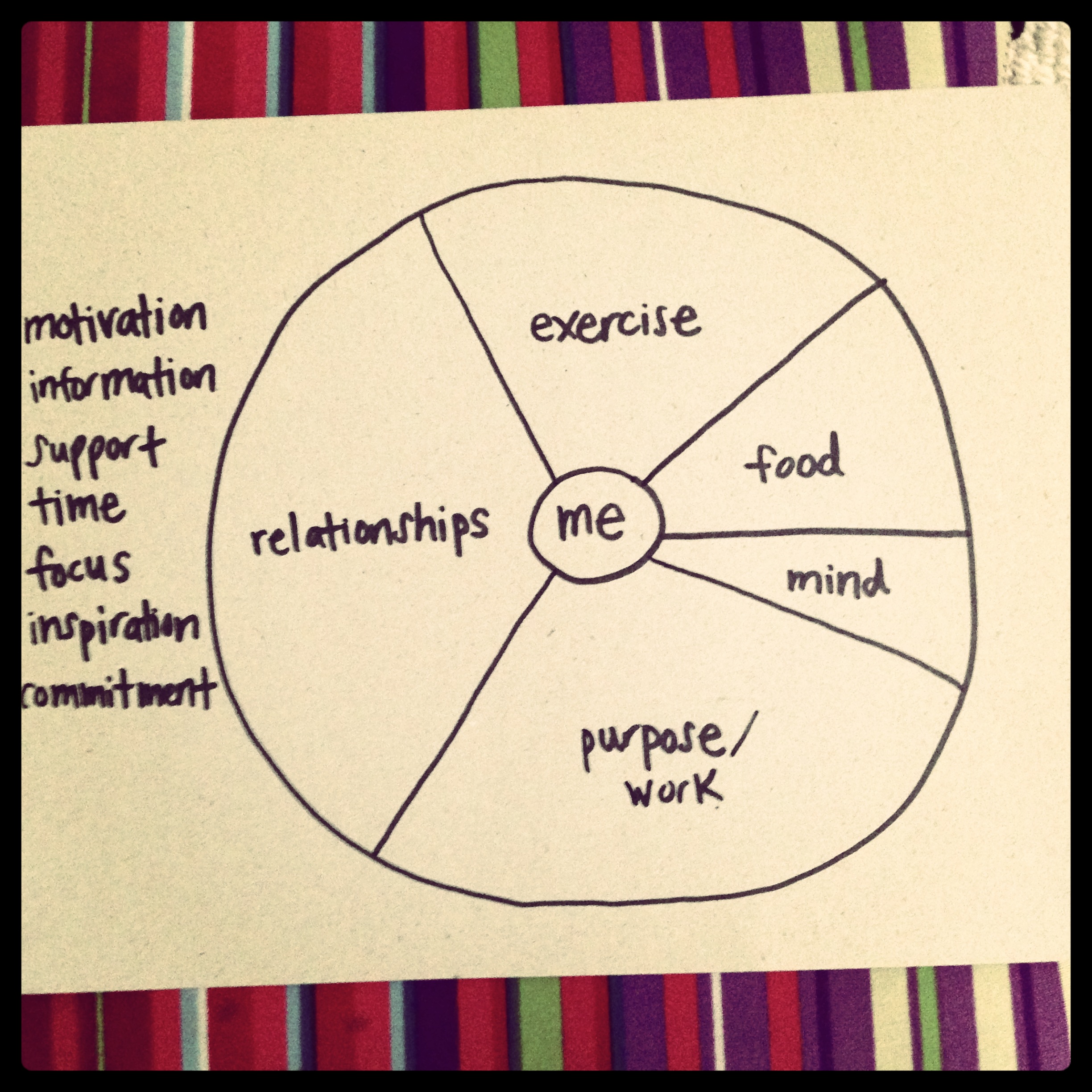
I’m sure people are frantically scrambling to build a platform that makes sense of not just our physical health, but our overall well-being.  And overall, I think this is a good thing.  Probably a great thing…maybe even a world-changing thing.  But the value of all of this information hinges on what we actually do with it.  What signal are we looking for, why, and what decisions/behavioral changes do we make based on what we learn?  What unique blend of data matters to US?  I have a super rudimentary way of thinking about this, which is a pie graph of what I’m focusing on at any given time.  Here’s the graph I made this morning:

photo(22)

It shows where I’m focusing my effort right now…not necessarily my time (I probably spend more time making and eating food and using my brain than this graph shows)…but my energy.  Once I sketch out how I’m focusing my effort, I think about what I’m looking for in each category.  This usually includes one/some of the following: motivation, information, support, time, focus, inspiration, commitment.  Once I know what I’m working on and what will help propel it forward, I can make clearer use of my time and find signal in noise.  It’s imperfect, but its a good check now and again to try to focus on the things that matter most.

What tools do you use to keep track of your health?  Do they add value or noise?  Do the signals you’re looking for change over time?  If you could design one tool to keep track of your overall well-being, how would it work?  

Eat Local

Even though I now live in a place where “summer” extends far beyond the short window when schools close and summer camps open, I still love the way Memorial Day marks the unofficial (pre-solstice) beginning of the season of long days…meals outside…sweaty workouts…family downtime…new top 40 hits…bare skin…BBQs…beach reads…skinny dipping…s’more making…fireworks…nostalgia…FUN!  To kick off the season, I’m going to make a special trip to the farmer’s market this Sunday to stock the kitchen with seasonal deliciousness (something I’m trying to do more consistently).  If you’d like to do the same, Field to Plate offers a comprehensive list of farmer’s markets around the U.S.  Happy (and healthy) eating this weekend!

On a related note, I need some new food inspiration.  Do you follow a food blog the inspires you to cook great, seasonal dishes?  I’m thinking about trying out a few of Saveur’s 2013 Best Food Blog winners, but I’d love recommendations!

poster by my-name-is-annie via deviantART

poster by my-name-is-annie via deviantART

Car-Less Fitness

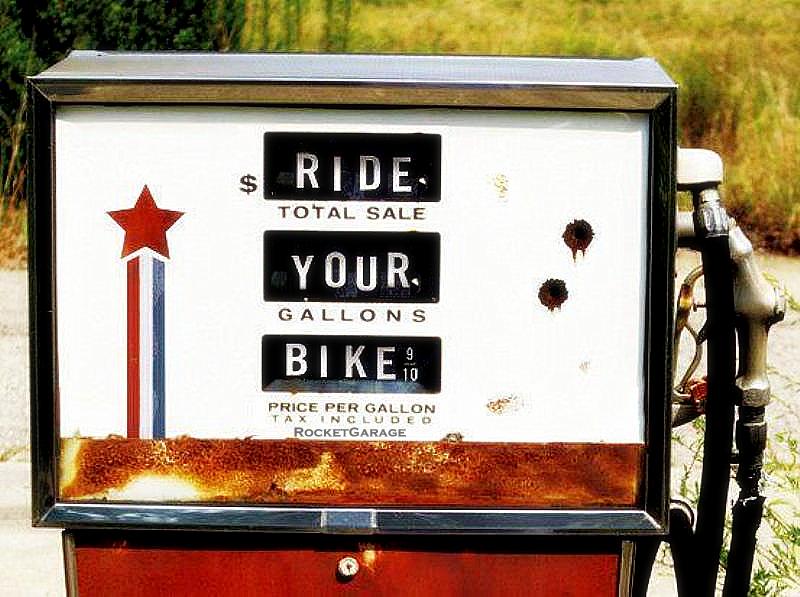
ride your bike

My car puttered to a stop this week, turning out to be in dire need of a new alternator.  Unfortunately it conked out while we were out for dinner, meaning Sean and I had to schlep our kids and ourselves a few miles home on foot in the near dark.  This sounded something like, “Carry me.  Put me down.  Pick me up.  I don’t want to be picked up! Where is our car?”  But, the silver lining of being car-less for most of the week has been better integrated fitness (not exactly workouts, but definitely fitness).  Here’s what it looked like:

Monday (5 miles of running): Ran 2.5 miles each way to volunteer at the kids’ school and get back to work. I stashed a t-shirt in my son’s cubby in the morning so I’d have something dry to put on when I got to school, and I took an awkward “French shower” in the ladies room at work when I returned. This only took 15 minutes longer (total) than driving, including the “French shower.”

Wednesday (15 miles of biking): Biked the kids (and 2 lunchboxes, 2 sets of sheets, a change of clothes, and a computer) in the trailer from home –> school, school –> work, work –> school, school –> doctors’ appt, doctor’s appt –> home.  Listened to giggles in the trailer the whole way (except for when kid #1 was squashing kid #2’s head into the side of the trailer), and someone at work commented that the flag on my bike is “cute.”

Thursday (6 miles of biking and 3 miles of jogging): Biked to/from work (6 miles) and jogged 3 miles to pick up the car at the end of the day.  That 3 miles — which I never would have done otherwise, since I ran this morning — actually cleared my head after a long day.  I came home happier and more relaxed than if I would have cruised home with the A/C on listening to NPR.

This teeny episode of forced bike/run commuting was a good reminder of how easy it is to make simple changes that lead to a more active day.  I’m not sure if I’ll ever adjust to the French shower, but the fresh air in my face and the sun on my back mid-day definitely make it worth it.

What’s the last workout you fit into a crazy day?  Would you rather integrate exercise into your daily routine or carve out time for dedicated workouts?

Graduation Season

photo by trazomfreak, via flickr creative commons

photo by trazomfreak, via flickr creative commons

I love graduation season.  Graduations are some of the moments most of us remember most clearly, marking both an ending and a new beginning…a time of massive change and promise and yes, fear.  I take note of the nostalgia that arrives as the season does, and I love the sense of possibility and optimism and truth that comes with it.  For people like me, whose only “graduation” this year is a kid’s migration from diapers to underwear, the posts and re-posts of graduation speeches that share nuggets of wisdom that both take us back to another time and make us think about our lives today.  Even if we’re worlds away from being twenty-two.

Transcripts and videos of speeches are all around us this time of year.  Time has a list of the top 10 graduation speeches of all time (yes, the famous Steve Jobs commencement address at Stanford is on the list), as well as a great editorial by Ken Robinson about “What Graduation Speeches Should Say, but Don’t.” (in short, our education system needs to be focused on helping people “find their element” and translate it into their lives and their work).  I’ll come back to that topic in another post. But for now, I’ll get back to graduation speeches and which one prompted me to write this post…

Yesterday The Atlantic published an excerpt from the commencement address Jon Lovett gave to the graduates of Pitzer College last weekend.  The speech was called “Life Lessons in Fighting the Culture of Bullshit.” He talks about the fact that graduates are entering a world where we’re drowning in bullshit — partisan rhetoric, inauthentic human connection, casual acquaintances saying “I love you, people describing everything as the “best thing ever.”  I usually call this bullshit “noise,” which is all of the talk that sits in the background of our minds drawing our attention away from the here + now…away from the things that really matter.  As any good graduation speech giver does, Jon gives graduates three pieces of advice as they go out into the world:

  1. Don’t cover for your inexperience.
  2. Sometimes you’re going to be inexperienced, naïve, untested and totally right.  Then, you need to decide: is this a time to speak up, or hang back?
  3. Know that being honest — both about what you do know, and what you don’t — can and will pay off.

What I like so much about this speech is the idea that being honest about who you are, what matters to you, what you know and what you’re working on is important.  It’s clarifying.  It helps us find signal in the increasing amount of noise that fills our lives.  If we all could do this…focus on the meaning and the purpose and the real connections and our authentic “elements,” as Sir Ken Robinson puts it, we may experience more quiet…more peace…more direction…and greater well-being.  I struggle with this daily, as the curious part of me loves noise.  But I find more peace when I’m able to then look inward and filter the noise. This inward view can show up in lots of forms — writing, talking with a close friend, meeting with a coach or mentor, figuring out what you love and what you loathe…all in service of being honest with yourself first, so that you can be just as honest with the people around you.

What do you think?  Do you feel bombarded by bullshit, and what do you do to filter out what matters most?

SoulPancake

photo by dawn ashley via flickr creative commons

photo by dawn ashley via flickr creative commons

I watched a video last night about Zach Sobiech, a teenager who lived with a full heart and a busy life and unbelievable wisdom as he dealt with a terminal cancer diagnosis.  The video went viral yesterday after he passed away at age 18…or as he said it, “just closed [his] eyes and [fell] asleep.  At the end of the video, when asked what we wanted to be remembered for, Zach said he “wanted to be remembered as the kid who went down fighting, and didn’t really lose.”  His closing words were an incredible combination of solid self-assuredness, profound sadness, deep perspective, and brightness.  Just plain brightness.  Amazing, even shocking…brightness.

That’s all I’m going to say about the video…it speaks for itself.  Check it out if you have tissues handy, would like a dose of perspective, and would like to honor Zach’s legacy (that life really just boils down to making other people happy).

This was the first SOULPANCAKE production I’d ever seen, and I checked out the site afterwards to see what it was all about.  It’s a beautifully designed site designed to serve up “brain batter of art, culture, science, philosophy, spirituality and humor to open your mind, challenge your friends, and feel damn good.”  I just liked it on Facebook so I can keep tabs on their work, and I checked out some of their content.  There is a tab called “Activities,” which is really fun, and something I’ll refer back to.  Here are a few of the exercises I liked as I scanned through:

  • In 100 words or simply one, tell us where you are most in your element.
  • Quick write your latest mantra. Breathe. Repeat.
  • Memory wipe time. List four things you’re dying to forget about.
  • In 100 words or less tell us what “the bigger picture” means to you.
  • Upload a creative travel guide to your home town.
  • Sum up what you are striving for in a single word.
  • What things are you working on now that will pay off in the future?
  • List the 10 most important things to you, in order.
  • Describe what you’d do with an extra day inserted into every week.
  • Fill in the following sentence five times: I belong
  • Upload a picture of hidden beauty.
  • How will you become a happier human?

And the list goes on.  SOULPANCAKE is trying to modernize spirituality, and I love what they’re doing.  Their provocative questions and content let you think about abstract things like God and afterlife and soul within the context of practical, real and beautiful things all around us.  It’s fuzzy meets real.  Serious meets fun.  Spirituality meets self-knowledge.  It’s a great attempt to deal with the hard stuff in an easier and lighter and more palatable way. I look forward to following along.

In Zach’s honor, may today be filled with brightness and love and compassion and joy.

What, if anything, guides you through the muddiness of modern spirituality?  If you had a question to add to SOULPANCAKE, what would it be?  

Goodbye “Workplace Wellness,” Hello WORK

Slide1

A few years ago (2010), I read a book put out by Gallup called Wellbeing: The Five Essential Elements. It outlines Gallup’s Wellbeing Finder tool, which is designed to help people assess how “well” they are in five categories: Career, Social, Financial, Physical, and Community. The book and the model underscore that these five elements aren’t independent entities, but rather intensely interwoven categories. In order to assess one’s wellbeing, each of the elements — as well as the interaction between all five of them — must be evaluated.  Hmmm…strinkingly similar to the concept of a wellfesto!

The book is straightforward…not rocket science…but it illuminated one thing for me that has really stuck with me since then and continues to influence my work.  Career — in the home, out of the home, however you define it — drives well-being.  In fact, Gallup’s data shows that people with high Career Wellbeing are more than twice as likely to be thriving in their lives overall than those who have low Career Wellbeing. This isn’t new news — a 1958 Gallup study found that while the standard retirement age for men in the 1950s was closer to 65, men who lived to be 95 or older did not retire until they were an average of 80 years old.

So what does this mean?  To me, it means that the idea of “workplace wellness” is dead.  Yes, I love working on the treadmill and eating salad in the cafeteria as much as the next person does, but what matters more is how I FEEL when I’m at work.  The well-being conversation should start with WORK — why you work, how you work, when you work, what you do, who you work with (once that’s all set, then the treadmills and salads are icing on the cake).  I’d argue that getting to a place of loving the weekdays as much as the weekends is much better for our overall health than a 3-miler on the treadmill at lunch (which of course, until we reach this utopia, doesn’t hurt).  And to be clear, I’m not talking about working all the time…I’m talking about creating an ecosystem of work that feels additive, not sucking.  One that feels whole, not fragmented.

Our society trains us to think of work as, well, work — something undesirable, something we’re forced to do, something we would avoid if we could.  In this paradigm, workplace wellness makes sense (add on the “wellness” to make up for the work).  I can’t wait until this model goes away, and we enter a world where the focus is on finding joy in the everyday, being the same person at work and outside of work, meeting on bikes and treadmills, and measuring impact instead of hours.  A world where workplace wellness doesn’t need to exist…because work itself keeps us well.

What do you think?  This is a personal quest for me, and I’d love to write a longer post/article about this topic, so if you have ideas/thoughts/examples/skepticism, please comment or send me a note!

Alphabet Scramble

Learning from parenting and life, while trying to get dinner on the table

The Lemonade Chronicles

A quixotic quest for the bright side.

mamajamas mom

don't sweat the baby stuff

The Development Sherpa

by SBK & Associates

wellfesto

hacking health, designing life

Rudeysroom

Rudey's Room

Building Customer Driven SaaS Products | Jason Evanish

Posts with strategies and tactics on building great products and how to be a better leader

The Blog of Author Tim Ferriss

Tim Ferriss is the author of five #1 New York Times bestsellers and host of The Tim Ferriss Show podcast.

Reflections Corner

hacking health, designing life

The Marginalian

Marginalia on our search for meaning.

Greater Good: Parenting & Family

hacking health, designing life