Skip to content

Posts from the ‘Be’ Category

Hockey Moments

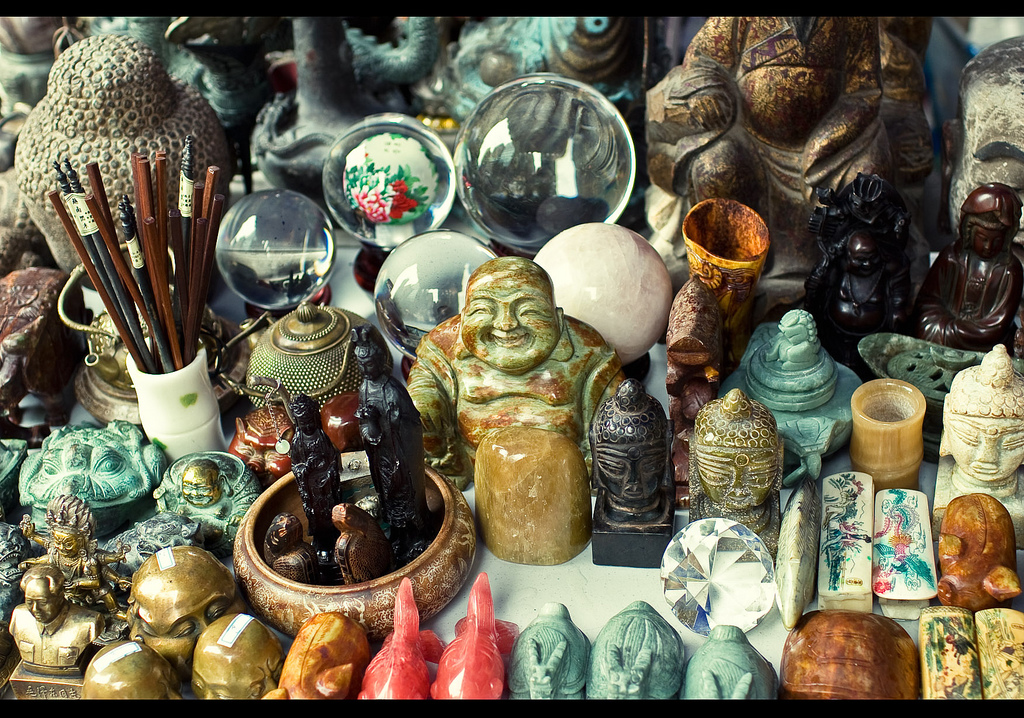
photo by TAZphotos, via flickr creative commons

photo by TAZphotos, via flickr creative commons

We went to watch one of the kids’ preschool teachers play hockey last night (yes SHE IS THAT AWESOME), and I was mesmerized by the sounds of ice scraping, the puck smashing into the wall, and the players yelling to one another between labored breaths.  I hadn’t been to a hockey game in a long time, and there was something about the pace of the game – the constant shifting as players went on and off the ice – that felt so “present.”

I think I was particularly struck by this last night because I don’t always feel present in my life right now. My mind skips to work when I’m with my kids and it drifts to my kids when I’m at work.  It meanders to future blog posts when I’m in spin class, and I sometimes check the yoga schedule when I’m mid-conversation with my husband.  Time and thoughts are fluid these days, and as much as I wonder if I’d feel more at peace if they were more carefully delineated, they’re just not right now.  I don’t know if they ever will be.  Despite what productivity experts lead us to believe, life is messy and orderly and crazy and beautiful at the same time.

Watching the players skate across the ice last night made me think that the way to be more present isn’t to be more present in every single moment. That’s just way too much pressure.  But it is about finding the “hockey moments” – the narrow (or broad, if you’re lucky) slices of time where you can be 100% in the moment.  Where you can find your flow and lose track of time “until the bell rings.” For this beautiful teacher, her moments are on the ice.  For a dear friend of mine, it’s when she’s doing crafts with her daughter.  For another friend, it’s cooking a meal.  For me lately, it’s writing these posts and standing on my head (not at the same time).

The more we can find these little micro-moments that help us stay in the now, the more we’ll actually be in the now.  So for me, moving from chaos to presence is about the little things adding up and becoming big things more than it’s about drastic changes or forcing focus.  It’s about starting with the low-hanging fruit and building upon that, moment by moment, day by day, and year by year.

When’s the last time you were truly “in the moment?”  What helps you stay in the present?
Trusting Our Guts

photo(18)This morning was one of those mornings when I felt like I’d run a marathon before I even left the house.  Jolted out of a dream at 6am by the sound of two sets of feet running full tilt into the bedroom, I went through the usual motions – brew coffee, give breakfast options, cook breakfast, start making lunches, set table, serve breakfast (my kids are still too little to make their own breakfast).  As soon as two steaming bowls of oatmeal were on the table, a three-alarm tantrum began.  “I don’t want oatmeal…I want eggs!  I want eggs!  I want eggs!  I know I didn’t say it, but I want eggs.  I WANT EGGGGSSSSS!”  This went on for twenty solid minutes, at which point my son finally bellied up to the table and said he’d finish his (then cold) oatmeal if I’d make him some eggs once his bowl was empty.  Impressed by his problem solving, I conceded, knowing that I had 25 minutes to shower, get dressed, get them dressed, finish the lunches, get my work stuff together, COOK EGGS, and get out the door.  Needless to say, I’m lucky my clothes matched.

The day progressed at a similar pace – albeit with rational grown-ups, not tantrum-y kids — until my meetings ended at 2pm.  My brain was tired from work and my heart was still unshakably heavy from the seemingly endless morning tantrum, and I knew I needed a re-set in order to make the rest of the day productive.  So I gave myself one.  I laced up my running shoes and headed out of the office for a 40-minute loop in the sunshine.  Transported by Pandora’s “Dance Cardio” station, my frustration quickly faded away, opening up space for new energy and fresh thinking.  After just a few minutes of running, I was able to focus on what I needed to do in the afternoon.  As my stride evened out, my perspective shifted, and I returned back to my afternoon workload in a much brighter place.

I bring this up because although I write a lot about (and wholeheartedly believe in) planning and thinking ahead and optimizing and being proactive, the reality of life is that gut feelings…reactions…instincts often trump all of those things.  Structure and guardrails and commitments are there to guide us and remind us of what matters most and how we want to live.  They’re there to push us to do things like wake up in the dark to squeeze in a workout or clean our veggies on Sunday so we don’t eat cheese and crackers for dinner every night.  But life doesn’t always go according to plan, and spontaneous decisions are sometimes the best way to make sure we’re taking care of ourselves in the moment.

Today trusting my gut meant taking a run in the middle of a busy workday when the rational side of me would have said “you don’t have time.”  Other days it means ordering take-out because I would rather spend time with my kids than cook.  And sometimes it means letting my kids play on their own because I need to talk to my best friend on the phone.  Being able to trust our guts and act on what they’re telling us takes practice and a few “wins” to show us that it paid off.  Today’s run was one of my wins.

How do you make in-the-moment trade-offs that help you take care of yourself?  When have you succeeded?  Have these trade-offs ever backfired?

20 Things Wellfesto Has Taught Me About Blogging

photo by maria reyes-mcdavies, via flickr creative commons

photo by maria reyes-mcdavies, via flickr creative commons

I’ve been blogging daily for just over four months (this is my 98th post), and people often ask how it’s going.  Knowing that they’re often asking out of politeness, I usually answer with something low-risk and banal like “I’m still really enjoying it.”  Which is a 100% honest answer — I am.  But behind this, there are lots of emotions — elated, uncertain, proud, disappointed, peaceful, anxious, and vulnerable — that I only talk about if someone probes further.

The thing is — no matter what your reasons are for having a blog or any sort of publicly facing platform (and they could be anything from learning to personal growth to sharing with loved ones to wanting to become Oprah)  — it’s really hard to live your life out loud.  With authenticity comes vulnerability, with having a voice comes finding your voice, and with growing comes failing.  So today, on random day 98…still in the dawn on my wellfesto project…here are a few things blogging has taught me thus far…

  1. A daily practice is super powerful — it’s sometimes the only “me” time I get all day (even if it’s bleary-eyed “me” time)
  2. Having a daily practice means making trade-offs in other parts of life (i.e., I can’t remember the last time I read a fiction book, and my home decor leaves a lot to be desired)
  3. The simple act of making something every day is rewarding (just making something…anything)
  4. Experience and expertise aren’t the same thing, and it’s important to be clear which hat you’re wearing (or else people will think you’re selling snake oil)
  5. Just because you love to do something doesn’t mean it will be your favorite thing to write about (i.e., I love exercise, but I often feel weird writing about it because I’m not coach or personal trainer)
  6. People love recipe posts (I guess the food blogosphere is alive and well)
  7. It is nearly impossible to write with emotion about things you don’t really care about (duh)
  8. It’s easier to talk about accomplishments than failures (but failure is what makes us human)
  9. Unless people comment, blogging can feel like a 1-way street, and you need to be OK with that (here’s a hilarious post about comments, btw)
  10. It’s weird to broadcast very personal stories to strangers (thus, no sex posts yet)
  11. People like pictures as much — or more than — words (after all, we do live in the world of 140-characters + Instagram)
  12. Writing is about finding the connection between what you want to write about and what people want to read about (great tip I learned from a famous writer)
  13. People want to see the messy, difficult side of life as much as they want to see the clean, beautiful side (hmmm…misery loves company?)
  14. Blogging can deepen existing friendships and start new ones (you know who you are)
  15. Typos are inevitably (inevitable)
  16. Making a commitment out loud helps you stick to it (there is no way I’d write every day if my blog wasn’t public)
  17. You can do a lot in 30 uninterrupted minutes (uninterrupted = no email, no social media, no wiping kids’ noses)
  18. It helps to have a few posts “in the hopper” for busy days (because some days it’s easier to edit an old post than write a new one)
  19. A narrower audience makes it easier to write (stay tuned)
  20. It takes a lot of writing to become a writer

So my short answer stands: “I’m still really enjoying it.”  And for now, I’m so very happy with that.

What about you?  If you’re a blogger (newbie or seasoned), what have you learned about yourself or the blogosphere through the process?  What has been hard, and what has been amazing?  

Unplugged

camping beach

This weekend’s camping trip confirmed my love/hate relationship with camping.

LOVE: sleeping close to the ground, waking up to chirping birds, feeling self-sufficient, making campfires, eating trail mix, relaxing in the late afternoon sunshine, experiencing the independence it brings out in my kids, being around fantastic, like-minded people, having easy access to amazing natural beauty (in this weekend’s case, the beach), wearing bright colors, UNPLUGGING

HATE: eating out of a cooler, finding dirt in my sleeping bag, finding dirt in my pockets, finding dirt in my food, finding dirt behind my ears, shivering in the morning, using communal toilets, seeing one too many raccoons, dealing with SO MUCH GEAR (although Sean deals with it, so this shouldn’t really be on this list)

Thankfully — both because Sean has a love/love relationship with camping and because it’s Earth Day today — the LOVE list is longer than the HATE list.  Yes, we will indeed camp again, and I can now refer to this list whenever I’m feeling cranky about the cold and the dirt.  And while all of the things on the LOVE list are important to me, the one that’s extra special because it’s hardest for me to achieve in my normal (electricity + running water filled) life is the ability to unplug.

I didn’t open my computer (and minimally used my phone) from noon Friday until this morning, and it felt purifying and empowering.  I know this is a ridiculous thing to be so proud of — 2.5 days sans computer — but the reality is, it rarely happens.  And even in a short time, it’s amazing how connected I felt to my family and how much I didn’t even miss my steady information diet.

I did a bit of research about unplugged weekends this morning, and found out there is actually a National Day of Unplugging.  I’m sure I was surfing some random website during this year’s celebration, but I’m marking my calendar for next year’s shebang, March 7-8, 2014.  I also found a good article published on Huffingtonpost.com making a pretty good case for unplugging.  It’s no surprise, but here are five reasons to steer clear of screens.  They…

  • Limit Ability to Pay Attention: Called “popcorn brain,” chronic Internet users often report having a tougher time focusing and tuning out irrelevant material
  • Increase Stress: This is more for heavy social media users suffering from the evil comparison that social media usage can provoke  
  • Disrupt Sleep: Screens actually emit a blue wavelength of light that tricks the brain into thinking it’s time to be alert…yet 95% of Americans report using some sort of screen in the hour before bed
  • Stunt Creativity: Screen-free time in nature has been shown to boost creativity though.  All the most reason to turn off the screen get outside!
  • Hurt: Yes, sitting is killing us slowly

I opened my trusty MacBook Pro this morning feeling bright-eyed and clear-headed, not anxious or already behind.  Pretty good ROI for just 2.5 days off.  Now the challenge is to make this happen whether I’m sleeping in the wilderness on the weekends or not!

How do you unplug?  Do you notice real emotional and physical changes when you get away from your screens and out into nature?   

Morning Reading

photo by NS newsflash, via flickr creative commons

photo by NS newsflash, via flickr creative commons

My first job out of college was at a PR firm, and I learned lots of lessons that have stuck with me.  I learned that crying at work is more than OK — it reinforces our humanity and can actually build bridges.  I learned to treat clients with “a little more sugar and a little less vinegar,” as my boss freely told me.  I learned that people actually like when you show your true colors.  I learned that bad ideas sometimes lead to the best ideas.  And I learned to always read the morning headlines.

The principals of the firm were emphatic about the importance of never being caught off guard by a client and often asked us about random news events to make sure we’d at least skimmed the main papers that day.  They believed in the value of connecting different areas (health + tech + politics + fashion, etc) in order to generate ideas and deeply understand the societal trends in which our clients’ businesses functioned.  I’ve found this to be true not just in PR, but in every job and any relationship I’ve ever had.  Being in the know helps.  And more importantly, it’s fun and expanding and funny and sad and human.

I love this lesson  because I feel like it’s given me a lifelong license to do something fun and personal (read about mainstream AND weird stuff) in the spirit of work.  Today’s reality is that fun + personal + work are becoming increasingly intertwined, so this now feels more natural than it did 10 years ago.

So how does this look for me?  Simple.  I try to read every morning for 30 minutes or so over breakfast before diving into the day.  I get most of my news via Facebook, Twitter and LinkedIn feeds, and I also read a few newsletters that I think have great variety:

How about you?  Do you spend focused time reading every day, and if so, what blogs/newsletters/papers/magazines that you love and couldn’t get through your day without?  

P.S. If you want to justify your social media habit at work, here’s a great article linking social media use and productivity!

Unmoments

I write a lot about ideas for getting the most out of every day – how to fit in workouts and dates and healthy meals and gratitude and self-care amidst crazy and busy and overplanned lives.  So today I thought I’d write about something just as important, and arguably even more meaningful: the moments in between.  The “unmoments.”  These are the moments when our brain has time to wander and rest, to drift from thought to thought and idea to idea. For me, these moments usually happen when I’m running or doing an art project or folding laundry or stirring a soup, when my mind is distracted enough from day-to-day stress to be free to begin to both generate new ideas and connect existing ones in interesting ways.

Most often known as “shower moments,” there is a long history and tons of research about down time and its connection with creativity.  Mihaly Csikszentmihalya, the Hungarian positive psychology guru best known for his work on Flow refers to these moments as “incubation,” of the time away from work itself where our subsconscious minds are free to work on our behalf and deliver ideas back to our conscious minds.  And based on the experience of wildly successful idea people (Steve Jobs reported getting tons of great ideas following meditation), it works.

We all need space to do and space to just be, and we need a healthy balance of both. If we’re spending most of our time “being,” we may not have a lot of material to incubate.  But if we’re spending all of our time doing, we are likely to miss the big ideas and aha moments that come with processing our day-to-day lives.  So, if you’re not already leaving space for these unmoments in your life, here are a few simple things you can do to make room:

  • Observe yourself for a week.  When do you have the most new ideas or even revelations about things that have been leaving you stumped?  When you’re driving?  Swimming?  Doodling?
  • Make time.  Once you identify what activities help your mind drift, try to do those things more often…even every day if you can.  Shift your thinking about this time from one of luxury to one of necessity and block it out on your calendar just as you would an important meeting.
  • Jot down your thoughts.  If you have ideas during your “unmoments,” jot them down (I literally keep a piece of paper taped on my wall…it’s that simple).  You may see patterns in your thoughts that will increase your understanding about something in your day-to-day life.

What works for you?  When do you incubate your best ideas, and how do you make time for it?

Early Bird Gets the Worm?

Today’s Idea: Set your wake-up time and stick to it like glue…7 days a week. 

If you’re wondering if it’s possible to shift your sleep schedule, read on…

I so very desperately want to be a really early riser, and over the years, I’ve tried to convince myself that I am one.  After all, when I actually manage to crawl out of bed before the sun rises, I love it (see my previous post about pre-dawn workouts).  There’s something spectacular about the stillness of the pre-dawn hours, when everyone in the house is peacefully sleeping and the stars are still sparkling outside the window.  And NPR’s Morning Edition at 5am beats a screaming child any day of the week.

But when I’m really honest with myself, I don’t think I fit the “really early riser” bill.  I’ve been getting up super early (5/5:30am) a few times a week for years, and it’s still MASSIVELY PAINFUL every time the alarm goes off.  I want to press snooze every single time, without fail.  This time of year is the hardest, when the spring time change makes darkness persist until the clock strikes seven…which led me to google “is it possible to change your circadian rhythm?” last night.  This search first led me to a slew of articles differentiating early birds + night owls (supposedly early birds are happier and healthier, and night owls are more creative), which were interesting but not particularly helpful because they generally don’t address “really early” (in most studies I read, early birds wake at 7am and night owls wake at 11am, so by their definition, I’m an early bird…just not an early bird by “trying-to-fit-it-all-in” standards).

I did find a good article in the Washington Post, however, which gave me hope that it IS difficult, but definitely possible to change our circadian rhythms.  The article gives a few tips for how to do this, the most relevant one for me being “Set your wake-up time — and then stick to it like glue. Ideally you should get up at the same time every morning, including — gasp! — those precious weekends. If you sleep more than 90 minutes later on a Saturday or Sunday, you will affect your body clock, readjusting it to the later wake-up time just as you have to get up early again Monday morning.

Aha…I think I may have figured out my problem.  I have always been in a weird cycle of waking early some days and then rewarding myself with sleep on other days.  Thinking about it now, this is sort of like eating a vegan diet two days a week and then gobbling up burgers the other five.  The body’s response: What the F is happening here?!  I’m realizing my focus needs to shift to sustainability (not forever, but for longer than a day or a week).  This then becomes a question of “me time” versus sleep (sometimes the only time I can get me time is before the kids wake up and after they go to sleep)…which then plays into prioritization.  Hmmm…shorter workout, more sleep?  Longer workout, less work?

These are tough choices, but they’re made in service of the fact that sleep is one of my non-negotiables (within reason…I DO have little kids).  And according to The New York Times, if I don’t get at least six hours, I’m more likely to gain weight.  So my current quest is to find a rhythm that I can make a habit….even if it means a 5:30am wake up call every day of the week.  I’ll post again once I’ve actually nailed that rhythm (note: at my current rate, this might be 2020).

How do you make sure you get the sleep you need and get the things done you want and need to?  Have you successfully overcome an allergy to super early rising?  If so, please share your tips!

P.S. If you’re trying to get up earlier than your body wants to, you might want to lessen the blow by checking out this list of the Five Best Alarm Clocks


Virayoga Inspiration

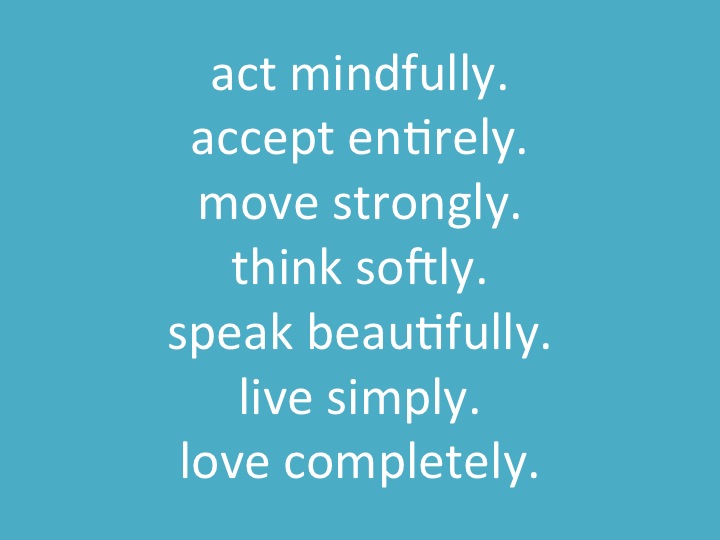
I’ve posted in the past about the power of mantra, or “a sacred utterance (syllable, word, or verse) believed to possess mystical or spiritual power. Mantras may be spoken aloud or uttered in thought, and they may be either repeated or sounded only once. Repetition of a mantra can induce a trancelike state and can lead the participant to a higher level of spiritual awareness.”  So on the three-month anniversary of starting this blog, I thought I’d post another simple one that has guided my life ever since I came across it in a Virayoga newsletter a few years ago…

virayoga quote

This simple set of phrases migrated from an e-newsletter to a post-it note to my chalkboard to a deep part of my memory where it lays the foundation for what matters most.  What mantra do you rely on?  Where did it come from, and why did it stick with you?

Lunchtime, Not Screentime

photo by steven lilley, via flickr creative commons

photo by steven lilley, via flickr creative commons

Did you eat lunch at your desk today?  I did, and most likely, so did 62% of Americans.  And to make matters worse, I wasn’t sitting at my desk reading love poems or the styles section or a novel or anything fun and distracting…I was staring at a screen.  I was typing.  I might have even had Microsoft Excel open.  And to make matters even worse, it’s a beautiful, sunny day outside.

Believe me, I didn’t wake up this morning thinking I’d eat lunch at my desk…it just sort of happened.  I didn’t have a lunch date and I wanted to carve out some time to get a workout in later in the day, so I plunked into my chair and mindlessly shoveled curry into my mouth in front of my computer screen, half focused on work and half focused on my curry.  Twenty minutes later, I hadn’t gotten much work done and I couldn’t recollect how the curry smelled or tasted.

The same truth I experience every single time I do it was reinforced yet again — eating lunch at my desk isn’t worth it.  It never has been, and I don’t believe it ever will be.  So why do I keep doing it — especially considering I’m now spending time each day writing a wellness blog (which I’ve also admittedly written during lunch in the past) and should know better?  I think it’s driven by an old way of thinking about productivity — the one in which minutes count more than effort and killing two birds with one stone is better than focusing on just one thing.  After all, that’s the way we grew up — looking around, more/faster seemed to trump smarter/better.

But our world is different now.  People value working smarter and better, doing things differently than in the past, and measuring impact instead of time.  Productivity gurus like Tony Schwartz (The Energy Project) espouse the importance of taking breaks.  Famous people like Arianna Huffington talk about the body’s need to restore (at Wisdom 2.0 she used the metaphor of the gazelle..running…resting…running…resting…running…resting).  And companies are (slowly) learning that it’s important to think about both short-term productivity and long-term sustainability.

So the good news is that we’re in a new era of working smarter and better; but the bad news is that old habits and mental models die hard.  We still eat at our desks thinking that it will make it easier or us to leave early or squeeze more into the day.  So what’s it going to take to change this habit?  Steering clear of the broader topic of habit change (future post) and staying focused on this one little shift (eating lunch at my desk), here are a few ways I’m actively trying to avoid falling into this routine: Read more

Smiling at the Bus Stop

photo by vox efx via flickr creative commons

photo by vox efx via flickr creative commons

In yesterday’s post, I mentioned a guided meditation about standing at a bus stop.  This was led by Justin Rosenstein, co-founder of Asana (collaboration start-up), and I thought it was so simple and effective that it was worth including here.  Here it is: Read more

Alphabet Scramble

Learning from parenting and life, while trying to get dinner on the table

The Lemonade Chronicles

A quixotic quest for the bright side.

mamajamas mom

don't sweat the baby stuff

The Development Sherpa

by SBK & Associates

wellfesto

hacking health, designing life

Rudeysroom

Rudey's Room

Building Customer Driven SaaS Products | Jason Evanish

Posts with strategies and tactics on building great products and how to be a better leader

The Blog of Author Tim Ferriss

Tim Ferriss is the author of five #1 New York Times bestsellers and host of The Tim Ferriss Show podcast.

Reflections Corner

hacking health, designing life

The Marginalian

Marginalia on our search for meaning.

Greater Good: Parenting & Family

hacking health, designing life