Skip to content

Posts from the ‘Eat’ Category

Vitamixing Dinner

Paul-bertolli_s-cauliflower-soup-307470-271247.730x410

Photo by James Ransom (featured on Food52.com)

We’ve been trying to eat more vegetables in our house (grown-ups included) and now have a brand spanking new Vitamix on the counter ready to spin any assortment of fruits and vegetables (and god knows what else) at 240 MPH. Read more

Hunger’s New Face

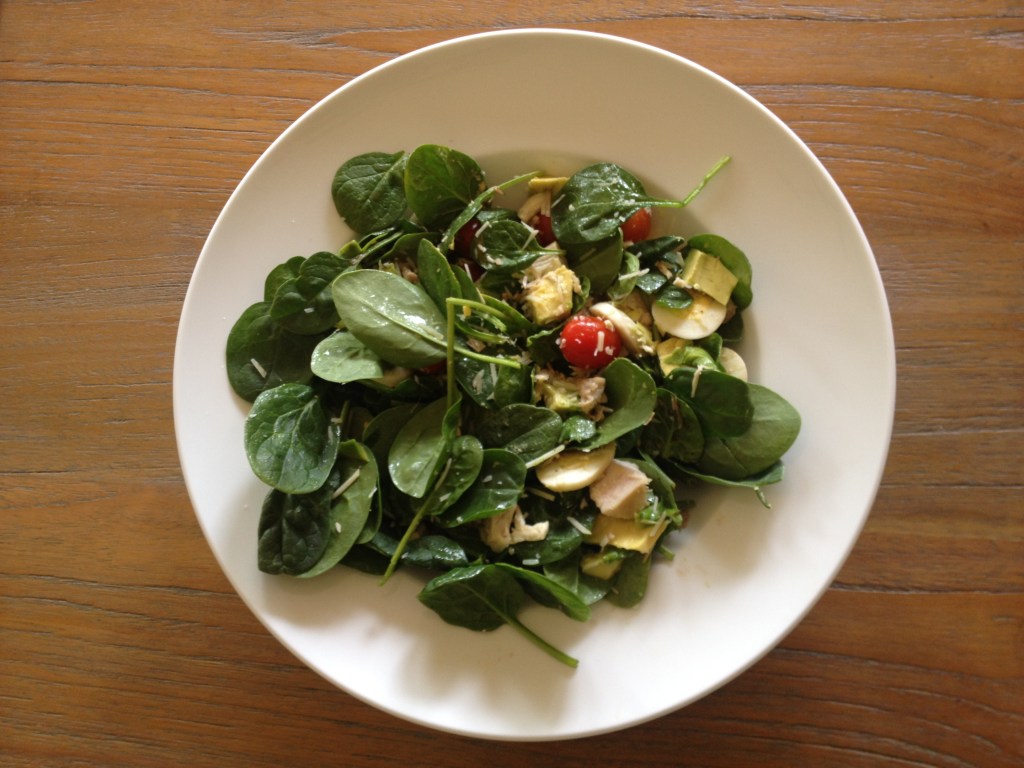
photo(16)I just drove home from Whole Foods with a carefully assembled spinach salad and elderberry kombucha in the co-pilot seat — living the good old suburban work-from-home dream — when an NPR story stopped me in my tracks.  It made me bail on the paid work I was going to do before blogging and scratch the post I had scheduled for today and instead write about food.  Well, actually not about food.  About hunger, or better labeled, food insecurity.

There’s a new documentary out called A Place at the Table (from the same Participant Media/Magnolia Pictures team that created Food, Inc.), and it’s re-invigorating the public dialogue about hunger (disclosure: I haven’t seen the movie yet, so this post is based on some research I quickly did on the issues the NPR story raised).  The new dialogue is far different from what many of us in the U.S. grew up thinking hunger was all about — emaciated kids in some far-off land with glassy eyes and bulging bellies.  It’s about the new face of hunger: people with full bellies who are still hungry…families who are not dealing the issue of not having food, but instead, the reality of the cheapest calories often being the most devoid of nutrients…kids surviving on calorie-dense, but nutritionally empty food in plastic wrappers.

We are talking about a lot of people.  50 MILLION — INCLUDING 1 IN 4 CHILDREN, to be exact (according to the movie’s web page).  That’s 15% of America’s households.  These are people you may even know.  People who are hungry and fat at the same time, so they’re harder to recognize.  Where I live, in Silicon Valley, 10% of the population is served by Second Harvest Food Bank, according to their website.  It’s totally insane that in an area with so much wealth and so much education, we can’t figure out better ways to help our food supply meet everyone’s needs.

Rather than trying distill the issue (mainly the Department of Agriculture’s corn/wheat/rice subsidies + pricing impact, and food deserts, I think) when I’m sure the film does it much more eloquently, I’m going to close this post by bringing it back to you and me…and my carefully assembled spinach salad.  HEALTHY FOOD IS A GIFT.  A PRIVILEGE.  SOMETHING SO MANY PEOPLE WOULD LOVE TO HAVE.  SOMETHING LOTS OF KIDS DON’T EVEN KNOW ABOUT.  So to start,  let’s not waste our energy or our money or our calories on junk food (which coincidentally is like a drug, as Michael Moss’s new book “Salt, Sugar, Fat” and the article he recently wrote for The New York Times Magazine points out). And if you want to do a bit more, here are the three small things I’m vowing to do today:

  • Stay informed.  How have I thought so little about hunger during the last few years that a short NPR piece got me so upset?  It’s easy to lose perspective in our little bubbles, and I’m going to make sure I’m continuing to learn about these issues and their root causes.  This includes seeing this movie ASAP.
  • Buy some meals.  My spinach salad and kombucha at Whole Foods totaled $9.  According to Second Harvest, every $1 donation = 2 healthy meals (and more than half of the food they distribute is fresh produce).  My indulgent lunch could have given 18 people lunch.  I just donated.
  • Practice gratitude.  As I shared in an earlier post, my family says a short “thanks” every night before dinner that is designed to be simple enough for the kids to say it.  We express our thanks for being “safe, warm, fed, and loved.”  I want to teach my children and remind myself every day that we shouldn’t take any of these gifts for granted, and a 1-minute (secular) blessing is one way we fit it in.

Alright, enough ranting for today.  But really, I hope this inspired some thought and maybe even some action.  Juice cleanse this, paleo that…if you are fortunate enough to be able to eat what you want, start there before you fret about the minutia of your diet.  And most importantly, if you’ve seen the movie (spoilers are OK), please share your thoughts.

Healthy Cookie Monster

photo by healthaliciousness, via flickr creative commons

photo by healthaliciousness, via flickr creative commons

I’m not much of a baker.  The precision of it has always been tough for me.  But the thing is, I live with people (especially little people) who like to eat baked goods, and I think kids (and grown-ups) should have treats once in a while.  So whenever I try a cookie or muffin I really like, I ask for the recipe and file it away to make on a rainy day.  Here’s one I had recently that is relatively healthy (sans gluten, dairy, refined sugar) and totally delicious….if you like almonds, that is.  Instead of wheat flour, these cookies are made with almond flour, making them way more nutrient-dense than the cookies on the back of the Nestle bag.  I got the recipe from one of my oldest and dearest friends Erin, who eats a super clean diet (she probably washed down this cookie with a kale and spinach and cucumber juice…seriously).  With or without a green juice, these cookies had me at hello… Read more

Diet du Jour: “The 5:2”

I’m one of the proud remaining subscribers to The New York Times.  Not just the online version, but the real paper version…the one my kids will talk about someday the way I talk the shiny red rotary phone that hung on my family’s kitchen wall when I was growing up.  Every Sunday morning after starting the coffee, I shuffle outside to grab the biggest and best edition of the week, which I proceed to religiously sort into the order in which I like to read it: Styles, Travel, Business, Review, Main, Magazine, the rest.

This was the scene yesterday, and as I plowed through the paper I came across lots of wellfesto-y articles.  Read more

Lunchtime, Not Screentime

photo by steven lilley, via flickr creative commons

photo by steven lilley, via flickr creative commons

Did you eat lunch at your desk today?  I did, and most likely, so did 62% of Americans.  And to make matters worse, I wasn’t sitting at my desk reading love poems or the styles section or a novel or anything fun and distracting…I was staring at a screen.  I was typing.  I might have even had Microsoft Excel open.  And to make matters even worse, it’s a beautiful, sunny day outside.

Believe me, I didn’t wake up this morning thinking I’d eat lunch at my desk…it just sort of happened.  I didn’t have a lunch date and I wanted to carve out some time to get a workout in later in the day, so I plunked into my chair and mindlessly shoveled curry into my mouth in front of my computer screen, half focused on work and half focused on my curry.  Twenty minutes later, I hadn’t gotten much work done and I couldn’t recollect how the curry smelled or tasted.

The same truth I experience every single time I do it was reinforced yet again — eating lunch at my desk isn’t worth it.  It never has been, and I don’t believe it ever will be.  So why do I keep doing it — especially considering I’m now spending time each day writing a wellness blog (which I’ve also admittedly written during lunch in the past) and should know better?  I think it’s driven by an old way of thinking about productivity — the one in which minutes count more than effort and killing two birds with one stone is better than focusing on just one thing.  After all, that’s the way we grew up — looking around, more/faster seemed to trump smarter/better.

But our world is different now.  People value working smarter and better, doing things differently than in the past, and measuring impact instead of time.  Productivity gurus like Tony Schwartz (The Energy Project) espouse the importance of taking breaks.  Famous people like Arianna Huffington talk about the body’s need to restore (at Wisdom 2.0 she used the metaphor of the gazelle..running…resting…running…resting…running…resting).  And companies are (slowly) learning that it’s important to think about both short-term productivity and long-term sustainability.

So the good news is that we’re in a new era of working smarter and better; but the bad news is that old habits and mental models die hard.  We still eat at our desks thinking that it will make it easier or us to leave early or squeeze more into the day.  So what’s it going to take to change this habit?  Steering clear of the broader topic of habit change (future post) and staying focused on this one little shift (eating lunch at my desk), here are a few ways I’m actively trying to avoid falling into this routine: Read more

Bircher Muesli

I just got back from a trip to Australia, where two dear friends exchanged some of the most heartfelt vows I’ve ever heard on a steep cliff overlooking Sydney’s sparkling harbor.  It was a spectacular ceremony, and it’s always exciting as a friend to sense a couple’s palpable anticipation of the joy a lifetime of togetherness will bring.  But, I think weddings are and should stay very private, so this post isn’t about my friends’ marital bliss…

It’s actually much more basic.  It’s about a love affair I had in Sydney with bircher muesli.  Sydney is hot and humid this time of year and full of beautiful people walking, running, boxing, training in parks, swimming in oceanside pools, surfing, relaxing in the sunshine on the city’s many spectacular beaches, and eating “real food.”  It makes Australia feel like the land of the healthy (and according to the Gates’ Foundation’s 2010 Global Burden of Disease Study, it is, sitting comfortably in the top 10 for life expectancies for both men (#6) and women (#9)).

Good food feels like a daily requirement in Sydney, which makes the appearance of bircher muesli unsurprising, but delightful nonetheless.  Some American friends of ours living on one of Paddington’s Victorian-lined streets served it alongside eggs and (yes) kangaroo at a delicious brunch, and I couldn’t get enough of it.  I liked it so much that I ordered it the very next day at the famous Bill’s restaurant.  Bircher muesli was created at the turn of the 20th century by a Swiss physician named Maximilian Oskar Bircher-Benner, an early raw food advocate.  And Bill’s has perfected a simple version of it we can all make at home.  Here it is (at home, I think I’ll add some nuts to the recipe as well):

Bircher Muesli with Stone Fruit (Source: Bill Granger)

  • 2 cups rolled oats
  • 1 cup apple juice
  • 1 cup coarsely grated apple
  • 1/2 cup natural yogurt
  • Juice of one lemon
  • 1/2 cup sliced peaches & nectarines
  • 1/4 cup mixed berries
  • 2 Tbsp honey

Directions: Place oats and apple juice in a bowl and soak for 1 hour, or overnight. Add grated apple, yogurt, and lemon juice to oat mixture and mix well. Spoon into serving bowls and top with fruit. Drizzle with honey.

This will now be one of my weekend brunch staples, which will be extra yummy because I think I’ll always associate it dear friends and sun-kissed Sydney.  What healthy foods have you discovered while traveling?  Have you managed to bring them home as a way to savor the taste and the memories?

Beefalo!

photo by michael filion, via flickr creative commons

photo by michael filion, via flickr creative commons

My dad introduced me to a new animal yesterday — the beefalo (a cross between 5/8 domestic cattle and 3/8 bison).  He had just learned about the mighty beefalo himself, having sat next to a part-time farmer, part-time United Airlines mechanic on a flight from Chicago to San Francisco.  The mechanic, who coincidently works in San Francisco but lives in INDIANA, has a small farm where he raises a range of animals for leisure and food.  He started breeding beefalos a few years ago and was so excited about them that he showed my dad a chart comparing the nutritional content of beefalo with beef, chicken, and fish.  This chart is the reason for this post.  Check it out:

beefalo

This stuff is so healthy!  And from what I could gather, it’s also generally sustainable and less likely than beef to be treated with antibiotics and all of the yucky stuff we don’t want in our bodies!  If you’d like to learn more, here’s a link to the American Beefalo Association’s site, as well as an article from Mother Earth News.

So…am I the only one who was in the dark about beefalo?  Have you tried it?  And if so, how did you cook it and what did you think?

Inspired by Asian Box

Menu-SlideFood inspiration can come from anywhere.  A memory of eating steaming yellow pepper and squash soup in Munich during a brief hiatus from college Eurorail madness compelled me to find a similar recipe when my garden overflowed with squash last summer.  A photo of a beautiful lunchbox assortment posted by Weelicious yesterday gave me the idea to put black beans in my kids’ lunches, breaking the monotony of sunbutter and carrot sticks.   And recently, the simple boxes my family occasionally orders from Asian Box have inspired a new way to cook healthy weeknight meals. Read more

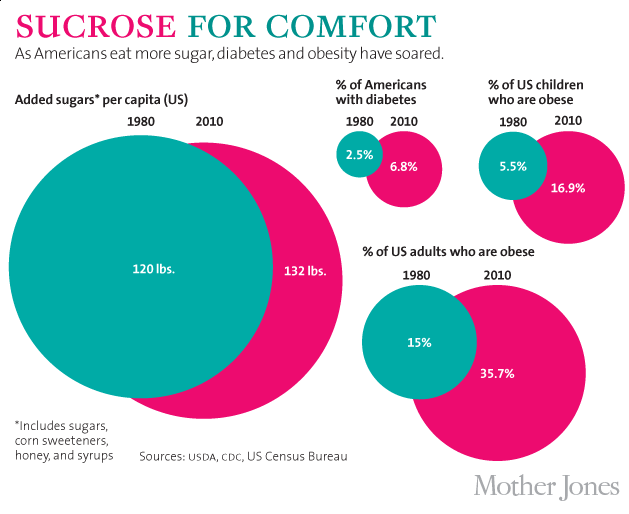
Not All Calories Are Created Equal

Source: Mother Jones

Source: Mother Jones

Coke’s anti-obesity ads caused quite a stir a few weeks ago, drawing sharp and widespread criticism that Coke isn’t taking responsibility for the role soda plays in the obesity epidemic (and in other conditions, primarily diabetes).  When the ad came out, ad veteran Alex Bogusky tweeted, “Tagline contest! Science says Coke doesn’t = happiness. So what’s the new tag? “Coke: None of this shit is our fault;”” Read more

Cleanse, Eat Clean, or Both?

photo by lollyknit, via flickr creative commons

photo by lollyknit, via flickr creative commons

A few years ago, our neighbor did a 3-week cleanse, during which he progressively eliminated certain foods, fasted for a day or two mid-way, and then slowly added foods back into his diet.  He raved about it after he finished it (like most people seem to when they complete a cleanse), saying he felt younger and fitter and more relaxed….he was a changed man. Read more

Alphabet Scramble

Learning from parenting and life, while trying to get dinner on the table

The Lemonade Chronicles

A quixotic quest for the bright side.

mamajamas mom

don't sweat the baby stuff

The Development Sherpa

by SBK & Associates

wellfesto

hacking health, designing life

Rudeysroom

Rudey's Room

Building Customer Driven SaaS Products | Jason Evanish

Posts with strategies and tactics on building great products and how to be a better leader

The Blog of Author Tim Ferriss

Tim Ferriss is the author of five #1 New York Times bestsellers and host of The Tim Ferriss Show podcast.

Reflections Corner

hacking health, designing life

The Marginalian

Marginalia on our search for meaning.

Greater Good: Parenting & Family

hacking health, designing life