Skip to content

Posts from the ‘Love’ Category

A Proud Life

The World Needs More Love Letters published an F. Scott Fitzgerald quote I loved today:

life you're proud of

Seeing this made me think about something I read last week that has stayed with me ever since.  A blogger (Hands Free Mama) wrote a post called The Important Thing About Yelling.  Here’s the part of it that deeply resonated with me:

“My oldest daughter had gotten on a stool and was reaching for something in the pantry when she accidentally dumped an entire bag of rice on the floor. As a million tiny grains pelleted the floor like rain, my child’s eyes welled up with tears. And that’s when I saw it—the fear in her eyes as she braced herself for her mother’s tirade.  She’s scared of me, I thought with the most painful realization imaginable. My six-year-old child is scared of my reaction to her innocent mistake.  With deep sorrow, I realized that was not the mother I wanted my children to grow up with, nor was it how I wanted to live the rest of my life.”

Like Hands Free Mama, I’ve definitely yelled at my kids.  I’ve most certainly blown up at people I love.  I absolutely fumed at my husband this week for forgetting one little detail about the weekly schedule.   And those are not proud moments.  They are massively UN-PROUD.  But they ARE the moments that can lead to the biggest change.  They’re the turning points…the ones that feel tough enough to make us want to start over…in a small way or in a big way.

So coming back to this quote, I love it for a few different reasons.  First, I like the word pride because only each of us knows that makes us proud.  It’s not about a judgement or an external view of how our lives should be.  It’s just about a feeling.  Our individual feeling.  Second, I like that these few words are a simple reminder that we can always change, no matter what.  Each of us deserves to live a life we’re proud of — whatever makes us uniquely proud — and that life can be re-defined any time we want to re-imagine it.

What in your life is making you feel proud?  And where are you ready to clear the slate?

SoulPancake

photo by dawn ashley via flickr creative commons

photo by dawn ashley via flickr creative commons

I watched a video last night about Zach Sobiech, a teenager who lived with a full heart and a busy life and unbelievable wisdom as he dealt with a terminal cancer diagnosis.  The video went viral yesterday after he passed away at age 18…or as he said it, “just closed [his] eyes and [fell] asleep.  At the end of the video, when asked what we wanted to be remembered for, Zach said he “wanted to be remembered as the kid who went down fighting, and didn’t really lose.”  His closing words were an incredible combination of solid self-assuredness, profound sadness, deep perspective, and brightness.  Just plain brightness.  Amazing, even shocking…brightness.

That’s all I’m going to say about the video…it speaks for itself.  Check it out if you have tissues handy, would like a dose of perspective, and would like to honor Zach’s legacy (that life really just boils down to making other people happy).

This was the first SOULPANCAKE production I’d ever seen, and I checked out the site afterwards to see what it was all about.  It’s a beautifully designed site designed to serve up “brain batter of art, culture, science, philosophy, spirituality and humor to open your mind, challenge your friends, and feel damn good.”  I just liked it on Facebook so I can keep tabs on their work, and I checked out some of their content.  There is a tab called “Activities,” which is really fun, and something I’ll refer back to.  Here are a few of the exercises I liked as I scanned through:

  • In 100 words or simply one, tell us where you are most in your element.
  • Quick write your latest mantra. Breathe. Repeat.
  • Memory wipe time. List four things you’re dying to forget about.
  • In 100 words or less tell us what “the bigger picture” means to you.
  • Upload a creative travel guide to your home town.
  • Sum up what you are striving for in a single word.
  • What things are you working on now that will pay off in the future?
  • List the 10 most important things to you, in order.
  • Describe what you’d do with an extra day inserted into every week.
  • Fill in the following sentence five times: I belong
  • Upload a picture of hidden beauty.
  • How will you become a happier human?

And the list goes on.  SOULPANCAKE is trying to modernize spirituality, and I love what they’re doing.  Their provocative questions and content let you think about abstract things like God and afterlife and soul within the context of practical, real and beautiful things all around us.  It’s fuzzy meets real.  Serious meets fun.  Spirituality meets self-knowledge.  It’s a great attempt to deal with the hard stuff in an easier and lighter and more palatable way. I look forward to following along.

In Zach’s honor, may today be filled with brightness and love and compassion and joy.

What, if anything, guides you through the muddiness of modern spirituality?  If you had a question to add to SOULPANCAKE, what would it be?  

Making Memories

photo by counselman collection, via flickr creative commons

photo by counselman collection, via flickr creative commons

“When people say that time goes by too quickly, I generally respond that time goes by at just the right pace.  But today, when I think back on the day you were born, that five-year chunk of time seems to have passed very quickly….you’re growing up in an interesting time, as there are lots of social changes afoot (legalization of gay marriage was a huge social issue in the past year) and technology continues to evolve at rocket speed….I was just looking for the email address I reserved for you when you were born and wondered to myself whether email will even exist when you’re old enough to use it….This year has been filled with tragedies in Newtown and Boston and around the world, and every time one occurs, I have to shift my mind away from the fear that it will happen closer to home and find strength in my confidence that you are going to contribute to making this a more peaceful and happy world….I love you with every bit of my soul.”

These are a few excerpts from the birthday letter I wrote to my son last night.  Every year on my children’s birthdays, I pour myself a glass of wine and take some time to pen a letter re-capping the past year in their lives, my life, our family, our corner of the world, and the broader world and society we’re part of.  My plan is to hold all of these letters and turn them over to the kids when they’re ready to fly the coop…giving them a glimpse into what happened in our lives and in the world as they grew up.

I generally don’t make cakes (I’m a crummy baker) or cool Pinterest-ready gifts on kids’ birthdays, but I do try to “make memories.”  Knowing I lacked the discipline to keep up with a traditional baby book, when I had children, I decided these letters would be the way I’d try to connect the dots for myself and our kids.  I do this because as time goes on, the events of our days and lives start to bleed together.  And an annual milestone like a birthday offers time and space and reason to extract the events and ideas and emotions that stand out over days and months and years and lifetimes and keep them in the forefront of our minds.  In the case of the letter I wrote last night, it’s also a great way to help my children (someday) understand who I am…not just as their mom, but as a person.  I freely write about my own hopes and fears, my own passions and projects, and my own frustrations and celebrations — to remind myself and teach them about the constant juggling and tradeoffs involved in life….and to remind them that each of us is our own unique person on this planet.

Not everyone likes typing letters like I do, and that’s fine.  There are tons of amazing forms of self-expression — songs, videos, drawings, handmade cards, etc.  For example, every year on our anniversary, Sean and I pull out a nondescript book that sits on our bookshelf and together jot down a few notes of trips we took, job highlights and challenges, friends we made, things that happened in the world, etc.   This weekend’s New York Times featured drawings authors made of their children at specific ages, accompanied by a brief 1-sentence summary of the parent’s greatest fear.

The practice of making memories will look and feel different for anyone who does it, but the point is that taking time to make memories — both for yourself and for your loved ones — can be a powerful way to anchor our past, direct our futures, and knit our common experiences together in really special ways.

What do you think?  Do you do anything special to mark the time between birthdays, anniversaries, or even just calendar years?  What do you do, why do you do it, and who do you share it with?   

Saturdate

photo by gluioo, via flickr creative commons

photo by gluioo, via flickr creative commons

Sean and I went for a bike ride Saturday.  A 2.5 hour bike ride.  Together.  We left home together…rode up a mountain together…and rode home together.  I know this might not sound that exciting to you, but it was a big deal for us.  Most Saturdays we don’t even see each other before noon at the earliest.  He’s gone before I wake up and when he gets back, I’m out the door before he can even mix a glass of Gatorade.  This is the behind-the-scenes reality of two parents wanting to get substantive weekend workouts in, yet feeling like we should be with our kids during every moment of non-work daylight.  It’s very efficient and very…unromantic.

Ever since having kids, I’ve felt like one or both parents need to be with the kids if they’re awake and we’re not working.  We even negotiated AWAKE and ASLEEP rates with our babysitter so that we didn’t feel frustrated about paying exorbitant babysitting rates for someone who never even see the whites of our children’s eyes (99% of the time).  Rather than go out and bask in the early evening sunshine or catch a happy hour, we usually head out after dinnertime/bathtime/bedtime only to fight off falling asleep in our soup (movies are out of the question after 7pm).  So this is why a daytime date (yes, we call a bike ride a date) was so extraordinary.

Don’t get me wrong…this wasn’t our first daytime date.  But daytime dates haven’t historically happened very often, and this was the first time I actually asked myself about the why.  Here’s the list of trade-offs I could come up with:

  • PROS: both of us waking up when it’s light outside, going out to breakfast as a family, doing an art project, working out together, feeling happy for the rest of the day, wanting to spend the rest of the day with the kids, kids get to play at park with fun babysitter
  • CONS: we get a bit less time with the kids, kids “had” to play at the park with fun babysitter

Enough said — this was a true case of quality over quantity — on both the date and the kids front.  We had better quality family time (all of us together versus ships passing in the night), and Sean and I stayed awake throughout our whole date.  It was a win-win, and while it might not become our weekly reality, it will definitely happen more often from here on out.

If you have kids, how do you feel about daylight babysitting?  How do you manage to get your weekend workouts in?

Work Friends Matter

field of rapeseed and clouds

I had lunch with a friend at work today.  Not just a co-worker…a friend.  We sat at a sushi bar and talked about our lives and batted around work ideas in a way that we could have done whether we worked together or not.  When we got up to leave, I felt better about life, I felt better about work, and I even felt better about the world.  I felt more connected, and I felt more like myself.

This brief lunch reinforced Gallup’s research — “having a best friend at work” matters (note: “best” is used here a way to differentiate, not necessarily connoting what we think of as a “best friend”).  Gallup talks about why it matters in the context of engagement + productivity at work, but from a personal perspective, I think it’s important to think about how much it matters in terms of our emotional well-being.  Spending as much time at work as we do in today’s world, having a friend — or lots of friends — at work makes it easier to be our true, authentic selves.  It makes it easier for us to show the highs and the lows…to share what’s working and what’s not…to give open and honest feedback…and to stay emotionally connected to a company and a culture.

So I end this week grateful…to live in a world where as life and work are blending, friendship connects the two.

Do you have a great friend at work, and how has it changed your work…and your life?

The Most Important Relationship

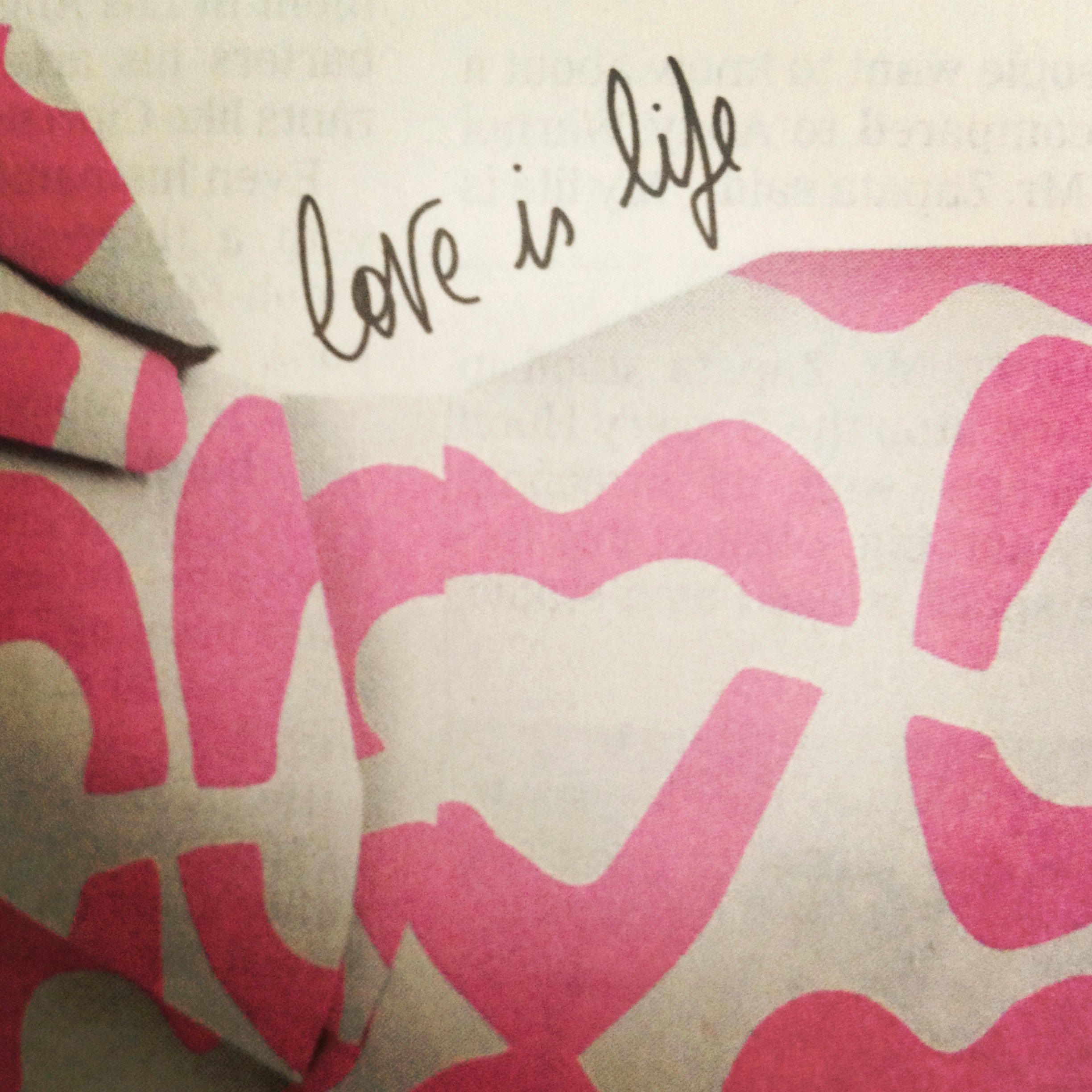
love is life

I heard Diane von Furstenberg talk today, and she totally blew me away.  I feel like I should go out and buy a new wrap dress tonight in her honor just to remember over and over again how her talk made me feel.  I’m not exaggerating – she was one of the most grounded, authentic, bright, self-assured, funny, ageless, wise, beautifully human people I have ever heard, and she gracefully put words to so many of the things I believe.

She made one brief, yet powerful comment that sums up who she is: “The most important relationship you have in life is the one you have with yourself” (she later re-framed this as your “friendship with yourself”).  After all, it’s impossible to have strong relationships with other people – your family, your partner, your kids, your colleagues, your friends – if you aren’t able to accept and embrace who you are.  As my mother told me from the time I was  little girl on, “you need to love yourself before you can love other people.”  Diane called this “smiling at your shadow.”

I’ve heard these words before – maybe even said them before myself – but for some reason they really rang true today.  She shared numerous stories about her hunger for independence, regardless of what relationships she was in.  She talked about being able to pursue audacious dreams and achieve amazing things because she knew who she was and she gave herself the love and care she deserved, minimizing self-criticism and self-doubt.  And she spoke about the lifelong quest for clarity about who we are and what we’re doing in the world.

Despite always being a little bit shy about standing ovations, I leapt to my feet after her talk to show my overwhelming gratitude – for both being a role model and for giving every woman in that room permission to treat ourselves with care…not in a way that minimizes the care of others, but as a way to make sure we have the energy to give our best to other people.  I now see my wrap dresses in a whole new light…and I can’t wait to channel my inner DVF every time I wear one.

Have you ever met someone who changed the way you thought about your life in a very short time?  Who was it, and what did you learn?

P.S. If you’re interested in a few other pieces of wisdom Diane shared today, here were some of my favorites:

  • “If you can pack a suitcase, you can organize your life.”
  • “Passion, instinct and love beat data every time.”
  • “You have to be serious at the base so you can be frivolous at the top.”
  • “The biggest gift you can give yourself is independence.”
  • “I have never met a woman who wasn’t strong.”

My Cohousing Dream

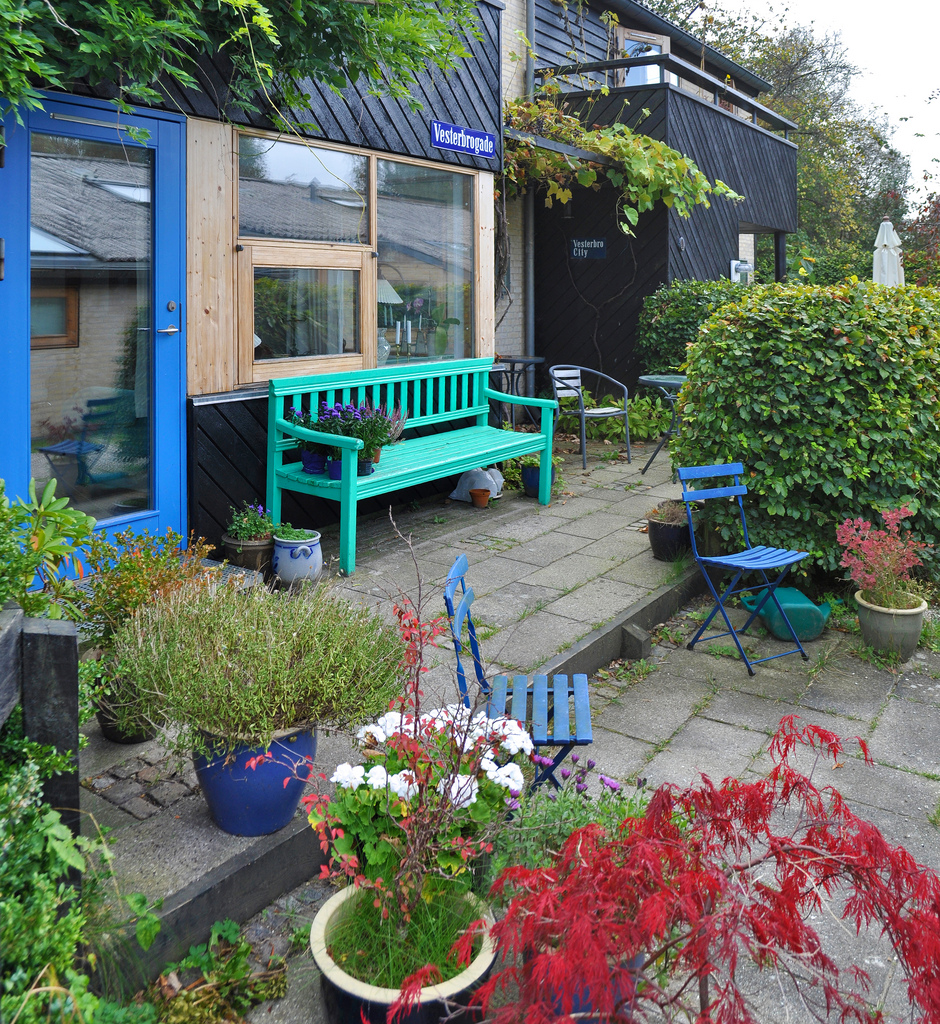
cohousing community in denmark; photo by seier + seier via flickr creative commons

cohousing community in denmark; photo by seier + seier via flickr creative commons

I recently watched the documentary Happy, an hour-long 2011 film that tells happiness stories from around the world.  Perspectives from both everyday people in places like swampy Louisiana and Kolkata’s slums, as well as leading experts in positive psychology and happiness get at the essence of what really makes people happy.  The messages are familiar (money doesn’t equal happiness), but the way it’s told is beautiful and human and real.

I was pretty sleepy when I watched it, so i admittedly drifted in and out of portions of the film.  But one segment really stuck with me.  It was about the world’s happiest country at the time (SPOILER ALERT): Denmark*.  This wouldn’t have been the first country I would have guessed, but when I heard it, it made sense.  Great public programs, excellent education, low unemployment, a strong middle class, and strong societal feelings of trust and safety all contribute to high happiness, as measured by the Organization for Economic Co-operation and Development (OECD) and the Happy Planet Index (HPI).  But the story that stuck with me most was told by a woman living in a “cohousing” arrangement.

As wikipedia describes it, a cohousing community is “an intentional community composed of private homes supplemented by shared facilities.”  Residents share in everyday activities such as cooking, dining, child care, gardening, and governance.  Basically, it’s like college/retirement homes, but everyone has their own full house and the community is more varied and multi-generational.  The cohousing movement began in Denmark in 1964 when an architect brought together a group of friends to discuss possibilities for a more supportive living environment.  Cohousing is now a well-established housing option in Denmark, and it continues to grow around the world.

The woman interviewed in Happy about her cohousing arrangement was pretty convincing (she jolted me out of near-REM sleep).  She cooks just a few times a month…her children have built in playmates…she can run out to the grocery story to get milk anytime because there is someone around to watch her kids…she has grown-up friends to eat dinner with every night…she has more amenities/facilities than she could ever have living on her own.  In short, she has community — something we know from research has a strong positive impact on our overall well-being.

I love love love the idea of cohousing.  Yes, maybe because it’s just an idea for me now and I’m not packing up our stuff in a Penske quite yet, but maybe because it’s something we as a society actually need.  People don’t consistently live near their parents and siblings anymore.  Housing is insanely expensive in some places.  Neighborhood schools aren’t always a given, reducing the natural community that they bring.  Finding good childcare is time-consuming and stressful.  And people are overall maxed out.  Life really does take a village.  And I’m not talking about a clothing optional, Big Love kind of village…just a normal, hip, cool, interesting one full of varied and curious and compassionate people.

So if I could design my own community, here’s what it might look like…

  • Mixed ages — elderly people, families, 20-somethings…united by a common commitment to community
  • Shared meals — maybe as a large community, maybe in smaller sub-communities
  • Guest housing — for family members and friends from out of town
  • Big, beautiful garden — manageable with lots of waterers…
  • Swimming pool — of course
  • Outdoor showers — because I love them
  • Art room — for kids and grown ups
  • Ample space in each single home — privacy would be even more important in a cohousing situation

What do you think?  Does this idea make you want to learn/explore more or buy a single family compound on 20 acres where you wouldn’t have to interact with anyone unless you made a big effort?  Do you know anyone who lives in a cohousing community and loves or loathes it?

*Note: Denmark is no longer the world’s happiest country, according to the Happy Planet Index (HPI).  Costa Rica took its place in 2012.

21st Century Postcards

photo by counselman collection, via flickr creative commons

photo by counselman collection, via flickr creative commons

I’m a luddite in some respects, and I always have been.  As a kid I wanted to be Laura Ingalls, and I dreamed of eating by candlelight and panning for gold and walking to school and running free on a 19th century farm.  I even begged my mom to make me a long gown and bonnet and get me a metal lunch pail to take to school (totally weird, I know).  And even today, I love old-fashioned things like hand-written letters and physical (versus online) stores and paper lists.

In light of my tendency to yearn for the simplicity of the past, it’s ironic that I now live in the land of the future — Silicon Valley.  But I love the future too.  Surrounded by things and people and ideas revolving around technology, it’s hard to not feel excited about the promise of innovation.  I love the way technology helps me keep track of information and stay connected to people and see my parents who live thousands of miles away and learn new things and understand the world around me.  But at the end of the day, I don’t think technology can replace the joy of physical relationships and tangible goods.  I think they need to gracefully co-exist.

One of the most concrete examples of this is the mailbox.  I don’t want it to go away, despite the rise of companies focused on virtualizing mail.  I love finding real letters in the mailbox…feeling the paper and seeing a loved one’s handwriting and knowing they took the time to sit down and write something.  My mom is really great at this (thanks, mom)!

So…in an attempt to marry my real life with my virtual life, I just tried out a postcard app called Postagram.  It was simple: upload photo from phone, write short message, upload address (I sent one to my sister), pay, and hit “send.”  Yes, my sister won’t get a handwritten card, but she will get a smiling photo of my 4-yr-old in a tie when she opens her mailbox one day next week!  This whole process took me under three minutes, and it’s a great way to communicate in a new and interesting way.

If you like this idea, there are lots of companies in this space:

How do you stay in touch with your loved ones?  Do you love real letters, or think of them as a thing of the past?

Staying In the Now

handsI read an essay last night called “Suddenly, They’re All Gone” (published in Tuesday’s New York Times Science section).  Written by a journalist reflecting on her years caring for her elderly relatives (her mother, mother-in-law, father-in-law, and aunt), it quickly pulled me in and ultimately made me cry.  I was teary for a few reasons…she wrote it with so much love and care and honesty…it made me think about the inevitable aging process that we (thankfully) don’t think of on a regular basis…in a lot of ways, I feared being her some day…and it reminded me of the many, many people my own parents have cared for in their later years, sacrificing their own lives to bring loved ones moments of brightness and joy amidst long days often spent alone.

The essay’s main point is this: when you’re “in it” (or “drowning,” as the author calls it) — dealing with the doctors and the caregivers and the appointments and the logistics of caring for another person — all you can think about sometimes is getting out of it…moving past it…what life might be like when it’s over.  But unlike other challenging times (like the terrible two’s, for example), when you’re dealing with someone nearing the end of their life, “getting out of it” doesn’t mean entering a new and beautiful phase that makes it all worth it.  It means the end.  Rather than growing and expanding, the closing of this chapter leaves a hole.

The author talks about what she misses — namely, being in the moment with the people she cared for.  She talks about the joy of bringing simple, physical comfort — similar to cradling a fussy child.  She talks about knowing what small things will make someone smile, and doing those things often.  And she talks about listening to the stories about the past that seem to come rushing out in people’s later years.

It was this talk of missing that made me cry, both thinking about the people I miss who are no longer with us, but also, the things I miss in my everyday life as my brain darts between past and future, rarely pausing in the present long enough for me to soak it all in.  I often find myself in the “when we get through this (i.e., the terrible two’s or a rough patch at work or a tense time in my relationship), it will be better and worth it” mindset.  And while admittedly this thinking keeps me sane, it also gets me out of the present…out of the “now.”  So this article was a timely reminder that as Jon Kabat-Zinn put it in his talk about Wisdom 2.0, “there will never be another now.”  It was the jolt I needed last night to remind to me soak it all up — the beautiful moments and the challenging moments and everything in between.

When is it hard for you to be in the “now,” and what helps you stay in the present moment?  

Warm Fuzzies

As I described in an earlier post, summer (sleepaway) camp was a formative experience for me.  It was the first time in my young life I felt truly independent.  It got me out of my sheltered world into a still-sheltered-but-not-as-sheltered place where vegetarians and musicians and people with dreadlocks and counselors with tatoos lived.  But most importantly, it reinforced that much of life’s meaning and joy comes from people and relationships and communities they form.  This focus on people wasn’t something we explicitly talked about; it was just one of the cultural norms of the camp.  It was the way people showed up every day.  One of the practical and concrete ways this manifested was overwhelmingly simple: every person in the 12-person tent taped a brown paper lunch bag onto her metal bed frame.  The purpose of the bag was to collect “warm fuzzies,” or short notes from tentmates about what makes them so awesome.  For example, warm fuzzies said things like “thank you for taking time to ask how I feel about being adopted,” or “I think you’re a beautiful singer,” or “I can’t believe you swam all the way across the lake this morning!”

I’ve thought about this exercise many times over the years, and wondered how this simple concept of proactive feedback could become more of a mainstay in our lives.  Maybe because of the warm fuzzy experience or maybe because “words of affirmation” are my leading love language*, I’ve tried to carry this through in my personal relationships.  Early in our relationship, I used to leave little handwritten love notes all over the place — in my husband’s suitcase, pocket, computer case, backpack, car, etc.  He started doing the same (maybe out of guilt, but I’ll take it), and my heart would leap when I’d find a warm fuzzy stuck on the mirror or on a bottle of juice in the fridge.  But as time has gone on and our lives have gotten more complicated, I’ve realized I barely ever do this anymore.

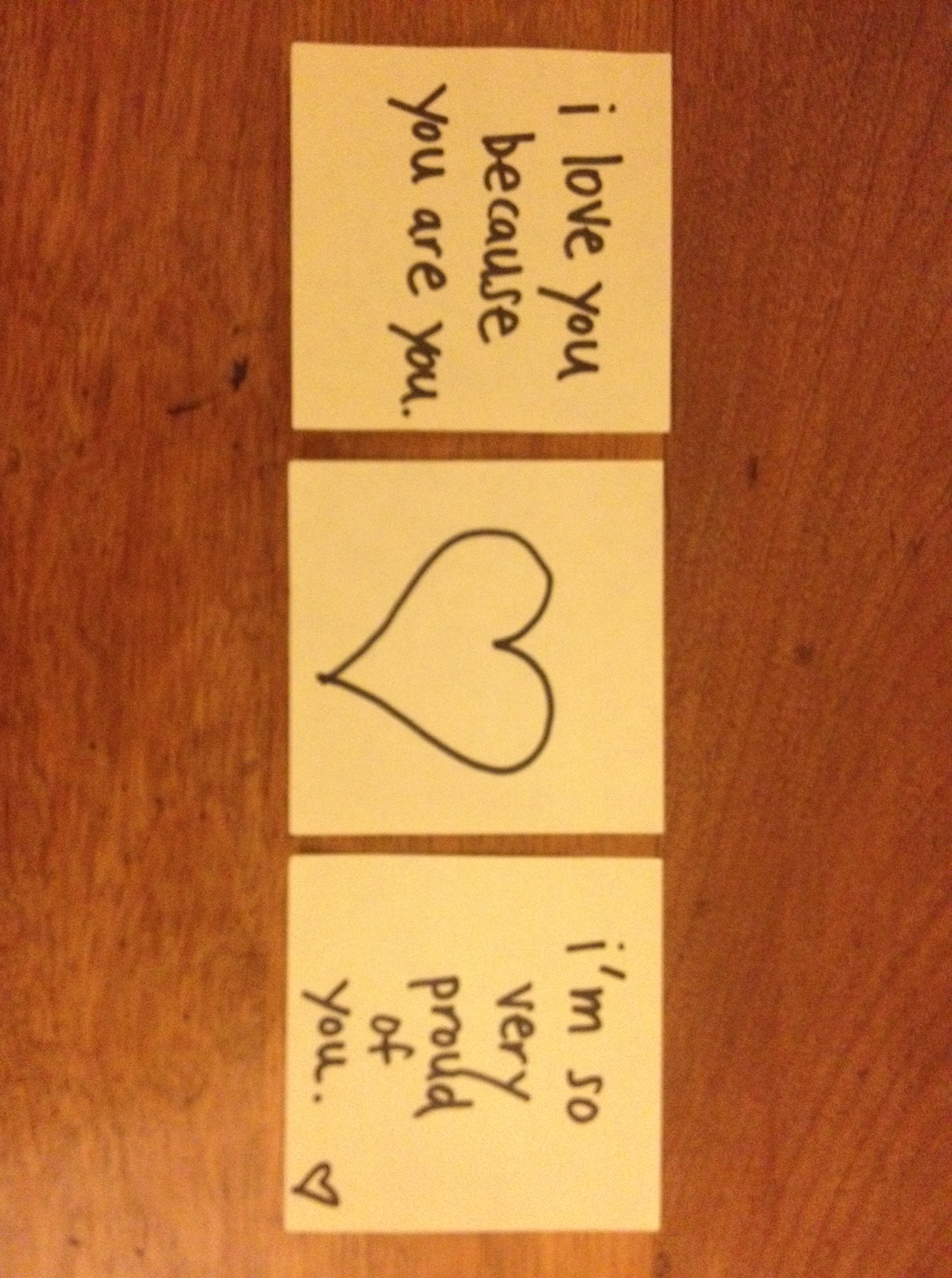
So in the spirit of wellness and connection and gratitude, I’m resurrecting it — for my husband and for my kids (what kid doesn’t like a love note in their lunch box once in a while).  This practice — a short message scrawled on a post-it — is for me, an easy and meaningful way to tell people I care about how awesome they are.  It can take less than a minute and can totally change someone’s day.  So if you do one thing today to support your relationships in a new way, give someone a warm fuzzy.  It might make their day — and yours — a whole lot better.

*If you’re not familiar with the concept of love languages, it can be a great relationship-building exercise.  You can learn more here.

Alphabet Scramble

Learning from parenting and life, while trying to get dinner on the table

The Lemonade Chronicles

A quixotic quest for the bright side.

mamajamas mom

don't sweat the baby stuff

The Development Sherpa

by SBK & Associates

wellfesto

hacking health, designing life

Rudeysroom

Rudey's Room

Building Customer Driven SaaS Products | Jason Evanish

Posts with strategies and tactics on building great products and how to be a better leader

The Blog of Author Tim Ferriss

Tim Ferriss is the author of five #1 New York Times bestsellers and host of The Tim Ferriss Show podcast.

Reflections Corner

hacking health, designing life

The Marginalian

Marginalia on our search for meaning.

Greater Good: Parenting & Family

hacking health, designing life