Skip to content

Swimming Lessons

swim

My son is learning how to swim.  After a few years of being tentative around the water, he suddenly loves it — grinning throughout every minute of the splashing and kicking and flailing and sputtering that inevitably mark the early days of swimming.  He hasn’t figured out the difference between a jump and a belly flop yet, and he earnestly looks up for approval every time he slams his stomach onto the water.  I try to smile encouragingly when it happens, and immediately brace myself for him to do it again.  He “floats,” if only for a few seconds before the teacher scoops his legs up using one of those styrofoamy noodle things.  And when he gets out, we talk in detail about how it feels to float, wondering if it’s how astronauts feel when they’re walking on the moon.  When he watches the adults gliding through the water a few lanes over, his eyes glimmer.  “I’m going to swim like that someday,” he says confidently.  “You sure will,” I reply.

Eagerly strapping on his little neon green goggles, my son is intoxicated by the thrill of learning something new…of getting a little bit better and a tad bit more confident and notably stronger every single day.  I covered the idea of learning new information a few weeks ago in a post called “Girl Meets Cheese,” but I think it’s worthwhile to think about learning new skills too.  When was the last time you learned how to DO something new?  Something totally brand new — like walking or talking or swimming or playing the guitar or riding a unicycle?  As we get older, it feels like our opportunities to learn how to do new things diminish; but in reality, the only things that diminish are our willingness to fail and our perceived ability to learn new things and our bandwidth to make time for them.  The new things can be small — like how to bake bread with quinoa flour (something I’m going to try to learn this weekend), or big — like how to code (which I’d love to learn).  And the little things matter just as much as the big things…I’d even dare to say they might help keep us young.

When I think about the things I’d like to learn how to do, here’s a quick and rough laundry list:

  • Learn to code
  • Learn to speak conversational French
  • Learn to paint with acrylics
  • Learn to skateboard
  • Learn to ride a tandem bicycle
  • Learn to swim the butterfly
  • Learn to do the whole ashtanga primary series by memory
  • Learn to coach other people
  • Learn to kitesurf
  • Learn to bake bread with quinoa flour (never hurts to put something on the list that you are likely to be able to check off soon!)

What’s on your bucket list to learn in the future?  And what’s the last thing you’re proud you DID learn?

P.S. If you read this post in hopes of getting a swim workout to try, here’s one I posted a few months ago!

Urban Hiking

view from twin peaks, san francisco

view from twin peaks, san francisco

What an absolute gift it is to have a day off in the middle of the work week.  Disrupting the usual cadence of work week/weekend, a mid-week day off feels a little bit like suspended reality (it’s the closest I’ve ever gotten to my dream of freezing time, ala Evie in that old show Out of This World).  It’s a day set aside for one thing: leisure.   And for my family today, that leisure was an urban hike.

Ever since living in New York City in my 20s, I’ve loved urban hiking, but look forward to it even more now that we’re not city dwellers.  Good old off-the-beaten path hiking is great too (and if you’re into that, check out this list of 43 Hidden Hikes to Try This Summer), but urban hikes feel adventurous.  Cool.  Unexpected.  Hip and fit at the same time.  Navigating gritty sidewalks, people of all shapes and sizes, and pungent smells…delighting in delicious surprises and beautiful vistas en route…and seeing a familiar place with fresh eyes, urban hiking helps you feel like a tourist in your own backyard.

Today we hiked along the Bay in San Francisco, checking out the America’s Cup staging area, stopping to play in the sand at the beach, starting at our reflections near the Palace of Fine Arts, talking about the varied architecture, smelling the flowers, and stopping for ice cream along the way.  San Francisco offers endless routes of challenging and easy hiking punctuated with hidden ge,s like the Seward Street Slides and Baker Beach and the wildness of Glen Park Canyon and the swings and staircases that appear out of nowhere.

San Francisco is urban hiking mecca (I read a great story about LA a few months ago too), but I’m sure there are beautiful options across the country.  And here are a few simple reasons to give it a shot:

  • No gear required (we bring a backpack for our 3-year-old, but that’s it)
  • It’s free (unless you get lost and need to use mass transit or a taxi)
  • It’s environmentally friendly (if you live relatively close to a city)
  • It’s social (you can visit people along the way)
  • It’s yummy (goodbye trail mix, hello crepes)

What do you like most about urban hiking?  Do you have a favorite hike to share?

Carpe Diem?

photo by jessica wilson, via flickr creative commons

photo by jessica wilson, via flickr creative commons

Earlier this week, The Atlantic reported on a study showing that people with a lot of self-control are happier.  When I came across the article, it was easy for me to see how this might be true in the longish-term (i.e., “I feel happy because I set out to avoid ice cream every day for the last month, and I succeeded”), but my gut instinct was to question whether the subjects were actually happier in the short-term…in the moment.  After all, ice cream is delicious.

The researchers wondered this too, and completed a follow-up study to look at this exact question.  Surprisingly, the results showed higher short-term happiness as well, reportedly because people with a lot of self-control don’t actually feel they’re denying themselves anything.  Rather, they get and stay ahead of the temptation, shutting it down before it can even enter their consciousness.  This might sound something like “I don’t eat ice cream.”

Call me a hedonist, but I’m still skeptical, despite this evidence and the (I’d guess) related data on delayed gratification (see: Stanford Marshmallow Experiment).  The thing is, I fear that self-control = boring/not fun.  And I think we can create a lot of happy moments by doing things that might be just a little bit reckless: staying up late with friends despite knowing we have a 5am wake-up call, running a race despite a nagging injury, saying “I love you” a bit too soon, speaking our mind without completely weighing the costs and benefits.

What this study boils down to for me is plain old common sense: focus on the areas where self-control really matters and ruthlessly get out ahead of the temptation.  If you have blood sugar issues, don’t keep sweets in the house.  If you’re tempted to spend money you don’t have, avoid shopping.  If you can’t stay off your phone when you’re with your kids, turn it off.  And once those hard and fast decisions are out of the way, be easy on yourself.  Balance limit-pushing with self-control, and carpe diem without losing sight of what lies ahead.

What do you think?  In what parts of your life is self-control really important, and where are you happy to indulge?

Me < We

relationshipsThe New York Times ran an essay Sunday called “The Gospel According to ‘Me’” co-written by a philosophy professor and a psychoanalyst.  The authors attack the “modern” focus on authenticity, inward thought, and “psychological transformation,” mocking the “new version of the American dream” as one marked by trite statements such as “Live fully!  Realize yourself!  Be connected!  Achieve well-being!”  The punchy piece asserts that “this search is an obsession that is futile at best, destructive at worst.”

I read the piece Sunday morning and needed to give it a bit of time to sink in before deciding how I felt about it.  My initial gut reaction was defensive: “How can someone possibly fault inward focus?  Why shouldn’t we aspire to find the same joy in the weekdays as we do in the weekends?”  Once the article settled a bit more, I opened my mind to the idea that I might be blindly drinking the Kool-Aid this article talks about, and dedicating lots of working and writing time to it to boot.  “Is this focus on well-being making me Pollyannaish and out of touch with reality?” I wondered.  “Is it just a surfaced replacement for the real, serious spiritual and moral questions in our world?”        

And after a bit more time, this is where I’ve landed.  We become what we do and think about all day long. The minutes we live each day are the minutes that make up our lives, and therefore, the way we spend our time matters.  It matters a lot.  And I think that without giving some inward thought to that question – what is making up the minutes that make up my life – life can pass us by.  We can wind up in jobs we hate and bodies we don’t recognize and mediocre marriages and days with more sadness than joy.  But our challenge as we look inside is to not get stuck there, spending so much time looking inward that we forget to see and feel and understand all of the people and things around us and the universe that connects us.  The tension is to embrace a life that is sometimes amazing and aligned and seemingly perfect, and sometimes painful and frustrating and ridden with sadness and guilt.

The authors of the article argue, “in the gospel of authenticity, well-being has become the primary goal of human life.”  I agree with them – the notion that well-being is the sole reason we’re here on earth is bogus.  The self-help industry has taken it too far.  Well-being is not an end in itself, but it is a critically important means to an end, and it’s one I fear is slipping away from us as our lives become busier and our bodies become more sedentary and our minds become noisier and our relationships become more complicated.

I believe we can all give more to our families and our communities and people we don’t even know yet if we’re living lives that are true to who we are and what we care about…if our bodies are fit and strong…if our minds are clear…and if our relationships are strong.  So at the end of the day, I’m more okay with “The Gospel According to ‘Me’” than I’m not…I just think we need to remember that “we” matters just as much as “me.”

What do you think?  Is it possible to look inward and look outward at the same time?  Does the quest for authenticity and well-being bring you joy, stress, or both? 

Double Dipsea

One of my favorite (and lately, one of my only) trail races of the year – the Double Dipsea – took place Saturday.  A stunningly beautiful and gruelingly difficult 13.7 mile trail race, the Double Dipsea is one of three primary races that take place on Marin County’s famous Dipsea trail every year.  The most famous of the three is the Dipsea, a 7.5 mile race that has been held annually since 1905, making it the oldest trail running event in the United States.  For super aggressive runners, there is also a 28.4 mile Quad Dipsea race.

The Double Dipsea course starts in Stinson Beach, CA, runs to Mill Valley, CA, and turns around and heads back to finish Stinson Beach where runners often cool their burning calves and wash away the inevitable poison oak in the frigid waters of the Pacific.  The terrain is serious – climbing and descending a total of 4,500 feet over uneven single-track footpaths.  The heat can be unrelenting (it was this year).  There are a few harrowing descents, made more dangerous by the elite runners bounding down them body lengths at a time, seemingly floating from step to step.  Six hundred and seventy-one stairs descend into and out of the halfway point in Mill Valley, shocking first-timers and still surprising the veterans.

Despite all of this – actually, because of all of this – the Double Dipsea is a magical race.  It’s a “handicap race,” meaning that everyone (regardless of age or gender) has a chance to win.  Basically, the oldest women start first (about an hour before the race officially starts), and the 20- and 30-something men start last.  While a 27-year-old guy won this year’s race, a 73-year-old man came in 12th.  It’s an amazing feeling to near Mill Valley – having traversed massive hills and soaked in sweeping views – and see the first grey-haired athletes running toward you, heading back to finish line.  May we all be so lucky.  This format makes it feel like everyone is in it together, reflecting the strong camaraderie that marks trail running in general — fiercely competitive and overwhelmingly embracing at the same time.

And so, I head back to the Double Dipsea year after year, lured by the history of the trail, the spirited volunteers, the friendly locals, a committed groups of friends, the challenge of the course, and the heart of the tribe who know and run it.  Who’s in for next year?

Do you have a favorite race or event?  When did you get hooked on it, and why do you love it?

Born Wise

kids on beach

I wrote a post last month about laughter — and specifically, how kids laugh hundreds of time every day, but somehow grow into 40-yr-olds who can count their daily giggles on one hand.  My kids teach me this simple lesson — laugh more — every single day.  Actually, I think that kids are full of wisdom — innate, untouched, beautifully naive, human wisdom — that can help us be better, more real, and more well grown-ups.  Here are a few of my favorite bits of wisdom from the wee ones:

Believe that people are good until they do something that makes you feel otherwise. And then be open to believing they are good again. 

Seek happiness for the people you love.

It’s OK to ask “why” 5+ times in a row.

Running is faster than walking.

If you’re scared, tell someone.

It feels amazing to learn new stuff.

Sleep…or you’ll be cranky.

Huge, long, wraparound hugs feel amazing.

All art is beautiful.

How about you?  What life lessons have you learned from a child, and why do you think we lose sight of the basics as we get older?

The World According to Rumi

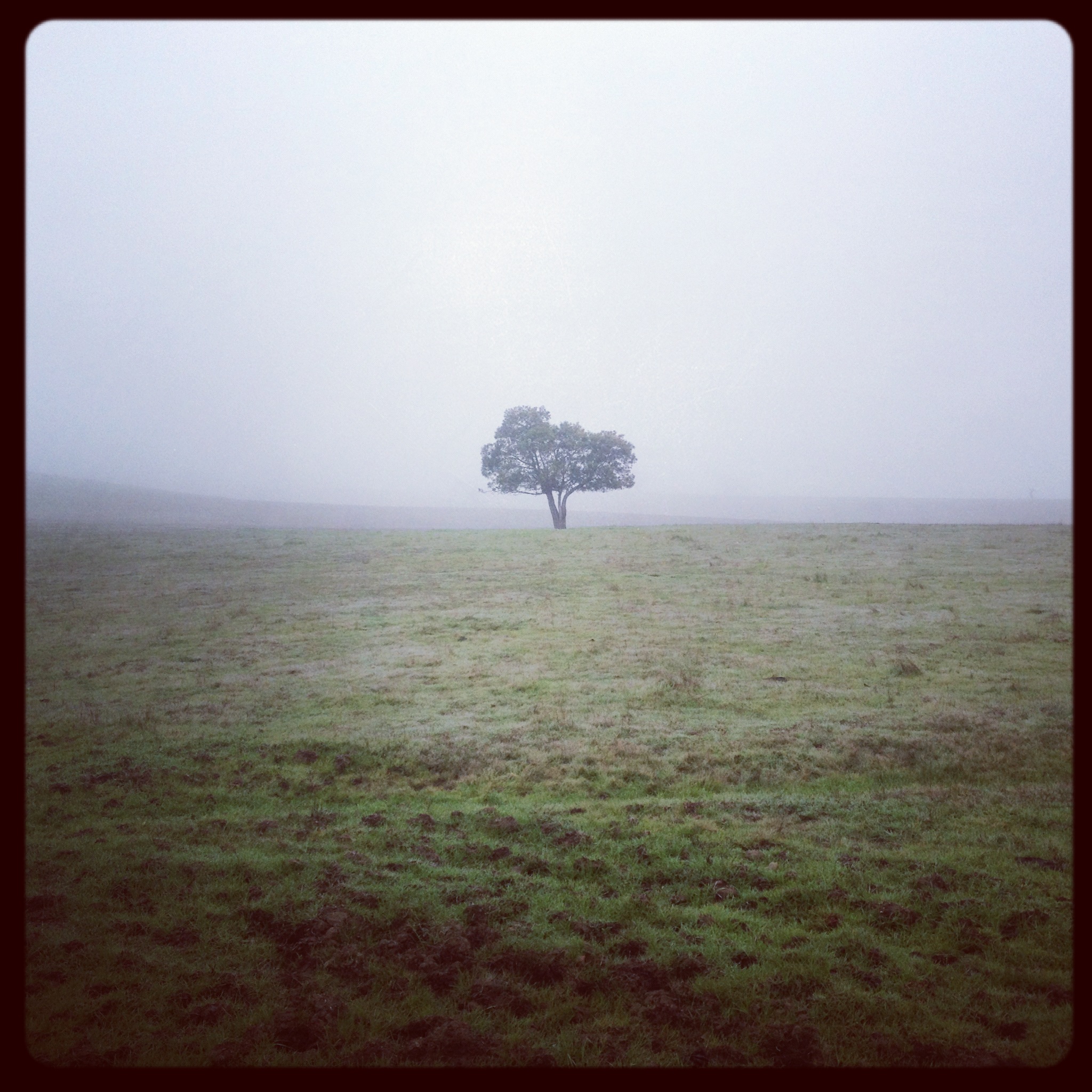
thinking tree

Living in a world in which it’s easy to get stuck in a myopic view of what it means to be “smart,” I love this reminder from Rumi, a renowned 13th century poet, jurist, theologian, and Sufi mystic.

Two Kinds of Intelligence 

There are two kinds of intelligence: one acquired, as a child in school memorizes facts and concepts from books and from what the teacher says, collecting information from the traditional sciences as well as from the new sciences.

With such intelligence you rise in the world. You get ranked ahead or behind others in regard to your competence in retaining information.  You stroll with this intelligence in and out of fields of knowledge, getting always more marks on your preserving tablets.

There is another kind of tablet, one already completed and preserved inside you. A spring overflowing its springbox.  A freshness in the center of the chest.  This other intelligence does not turn yellow or stagnate.  It’s fluid, and it doesn’t move from outside to inside through the conduits of plumbing-learning.

This second knowing is a fountainhead from within you, moving out.

I’ve recently been trying to take a few minutes each day to read Rumi’s wisdom, and I’ve found it calming and centering.  I’m always looking for new ideas — what do you read/listen to when you’re looking for spiritual grounding?

Rolling On Down the Road

strollerI drove past a shirtless guy today HAMMERING down the road with earbuds in and a toddler in his running stroller.  Seriously, he was running like he was being chased by the mafia (or his wife trying to get him to do the laundry)…sprinting so fast that I wanted to buy his kid a helmet and a pair of wrist guards.  I was both in awe and sort of terrified, wanting to applaud him and report him at the same time.  This guy is obviously not alone — according to the Guinness Book of World Records:

A 2:42 marathon pushing a stroller — seriously?  And people are competing for world records in stroller pushing — really?

I’ve done my fair share of fast running with a stroller (usually when it was the only option or when I couldn’t quiet a screaming baby at 5am).  And in those moments, I was overwhelming grateful to be able to get out the door at all; it was often the only chance I had at a real-deal workout.  So I totally respect and understand sprinting stroller man…and seeing him reminded me that for every thing there is a season.

But as time has gone on, and the kids have grown tired of sitting for long periods of time and I’ve wanted to carve out workout time as “me time,” my stroller runs are now more about company and conversation.  They’re about us, not me.  We talk about the seasons and traffic patterns and how the flowers smell and how the neighborhood construction projects are coming along; and the kids ask questions like “why does that car have a blanket on it?” and “why did that guy walk when the light was red?”  We look at the ocean.  We figure out what we’re going to eat for brunch afterwards.  We don’t count miles, we count park benches.  We have low heart rates and high spirits.

I’ve learned to love these runs for what they are — family time.  And save the sweaty sprints for the treadmill.

How do you feel about working out with your kids?  Do you try to make family workouts challenging, or do you save the “tough training” for solo/grown-up time?

Unitasking

The aim of life is to live, and to live means to be aware joyously, drunkenly, serenely, divinely aware.” – Henry Miller

photo by sethoscope, via  flickr creative commons

photo by sethoscope, via flickr creative commons

I used to think that multitasking — trying to ALWAYS kill two birds with one stone — was the best way to squeeze more into my life.  And in some ways, I still believe this.  I like to to do walking meetings.  I like to listen to podcasts while I work out.  And yes, date night (well, date day) is often a bike ride or a trail run.

But I’ve noticed that there is a stark difference between “combining activities to be efficient” and the dark side of multitasking which feels stressful and chaotic and “one foot out the door” at all times.  We see the latter everywhere these days — the guy at the gym talking on his phone and reading The Economist while he “works out” on the elliptical machine…the colleague who is banging out emails during another colleague’s presentation…the mom catching up with her friends at the park while her kid masters the monkey bars for the first time ever.  I recognize these people because as much as I’d like to think otherwise, I am more like them than I am unlike them.

There’s a ton of data out there about how multitasking impacts our productivity, our creativity, our memory, and our ability to influence others.  A Stanford study found that “people who chronically engage in media-multitasking exhibit certain cognitive deficits: specifically, they have more trouble ignoring distractions, keeping irrelevant memories from interfering in their present task, and switching from one task to another, mostly because they can’t help thinking about the task they’re not doing.”  And if you’re interested in this research, check out this article or a book written a few years ago called The Myth of Multitasking: How “Doing It All” Gets Nothing Done (a few basic google search terms will open up a spigot of related information too).

Despite reading about this for years, I’m only just now beginning to make the shift from multitasking to unitasking (as we know, information does not equal behavior change).  I’m trying out a bunch of practices to see what’s easy and what’s hard…what sticks and what doesn’t.

  • Check email at set intervals (morning, noon, end of workday, end of day)
  • Close tabs when I’m done with them (goodbye, days of last week’s kayak search still being open in my browser)
  • Try a new workspace when starting a new task (mixing up the environment can work wonders)
  • Embrace airplane mode (believe it or not, your phone’s airplane mode works at the park, at dinner, and at parties too!)
  • Clear the table (remove any technology, newspapers, books, magazines, legos, etc from the table and focus on the food and the company)
  • Schedule reading time (save media/blog reading for a structured hour each morning rather than reading all day long)
  • Work on a passion project (like a blog! or an art project!  or building robots in your basement!)
  • Sleep (sleep = unitasking by default!)

How do you feel about multitasking?  When does killing two birds with one stone help you, and when does it hurt you and the people around you?  Do you have any unitasking secrets to share?

Quinoa Flour + Garden Cleanout

photo by mnapolean via flickr creative commons

photo by mnapolean via flickr creative commons

Our garden is overflowing with tomatoes and zucchini these days.  The kids are making sure the tomatoes get plucked from the tangled vines once they’re red and juicy, but we’ve let the zucchini get a little bit out of control.  OK, a lot out of control.  Sean bushwhacked his way thorough the leaves last week to find a few that had embarrassingly grown to the size of bowling pins.  Everyone who has seen them sitting on the counter during the past week has said something like “woah, do you know that you’re not supposed to let zucchini get so big?” or “is that seriously a zucchini?” or “when zucchini are that overgrown, all you can really do with them is make bread.”

So…making bread is what we did yesterday afternoon.  Muffins, actually.  Delicious, warm, gooey, chocolatey, zucchini-y muffins — a true feat for the sporadic bakers in our house.  I had some quinoa flour in the cupboard and have been wanting to try using it, so searched for a recipe using zucchini and quinoa flour.  And bingo — I found a great one:

Rich Chocolate Zucchini Muffins

  • ⅔ cup packed brown sugar
  • 2 tablespoons canola oil
  • 3 large eggs
  • 1 cup unsweetened applesauce
  • 2 cups quinoa flour
  • 3 tablespoons unsweetened cocoa powder
  • 1½ teaspoons baking soda
  • 1 teaspoon ground cinnamon
  • ½ teaspoon salt
  • 2 cups shredded zucchini
  • 1 cup semisweet chocolate chips (6 ounces)

1. Mix the brown sugar, canola oil, and eggs in the bowl at low speed; add applesauce until mixture is smooth.

2. Whisk together the quinoa flour, cocoa powder, baking soda, cinnamon, and salt. Add to the mixer bowl and beat until the ingredients are smooth and well combined. Using a spoon or a rubber spatula, fold in the zucchini and the chocolate chips.

3. Pour the mixture into two greased muffin plans.  Bake at 350 degrees for 25-ish minutes until a utensil or toothpick comes out clean.

These were a huge hit, and would have been good even without the chocolate chips.  I’m definitely going to make quinoa flour a baking staple (you know, like four times a year).  Enjoy!

Have you ever baked with quinoa or any other special flours?  Make anything delicious?  Oh, and if you have any ideas about what to do with an armful of zucchini, please let me know!

Alphabet Scramble

Learning from parenting and life, while trying to get dinner on the table

The Lemonade Chronicles

A quixotic quest for the bright side.

mamajamas mom

don't sweat the baby stuff

The Development Sherpa

by SBK & Associates

wellfesto

hacking health, designing life

Rudeysroom

Rudey's Room

Building Customer Driven SaaS Products | Jason Evanish

Posts with strategies and tactics on building great products and how to be a better leader

The Blog of Author Tim Ferriss

Tim Ferriss is the author of five #1 New York Times bestsellers and host of The Tim Ferriss Show podcast.

Reflections Corner

hacking health, designing life

The Marginalian

Marginalia on our search for meaning.

Greater Good: Parenting & Family

hacking health, designing life